The tile is not the waterproof layer
Many homeowners assume the tiles keep the rain out. In reality, concrete tile sheds most of the water and protects what lies beneath it from sun and wind, but the underlayment is the true waterproof layer. Wind driven rain always gets under some tiles, and the underlayment carries it down to the eaves.
Tile can last for many decades. Underlayment wears out much sooner, especially under South Florida heat. Many Pembroke Pines homes built in the 1980s to 2000s still have their original underlayment, which means a large number of local roofs are reaching replacement age now. Your roof may be one of them.
Signs you can see inside the house
Ceiling stains that grow after heavy rain are the most common clue. They often show up first near exterior walls or beneath valleys, where water collects. Peeling paint or bubbling drywall near the top of walls can point the same way. Look closely at rooms on the side of the house that faces prevailing storm winds.
Leaks from failing underlayment are often intermittent. They may only appear during wind driven rain from one direction, which makes them easy to dismiss until the damage spreads. Keep a simple log of which rooms show stains and after which storms, because that pattern helps pinpoint the area of the roof to check first.
- Brown rings on ceilings that return after storms
- Musty smell in closets along exterior walls
- Mold spots on ceiling corners
- Paint blistering high on walls under the eaves
Signs in the attic
On a bright day, take a flashlight into the attic if you can move safely on the framing. Look for dark water tracks on the underside of the roof deck, stained or soft plywood near nail lines and damp or matted insulation. Rusty nail tips poking through the deck are a sign moisture is reaching them.
Daylight showing through the deck is a serious red flag. So is a sagging area between rafters or trusses. Take photos with the date so a roofer can compare what you saw with what they find on top. Never step between framing members, since the ceiling below will not hold your weight.

Signs on the roof itself
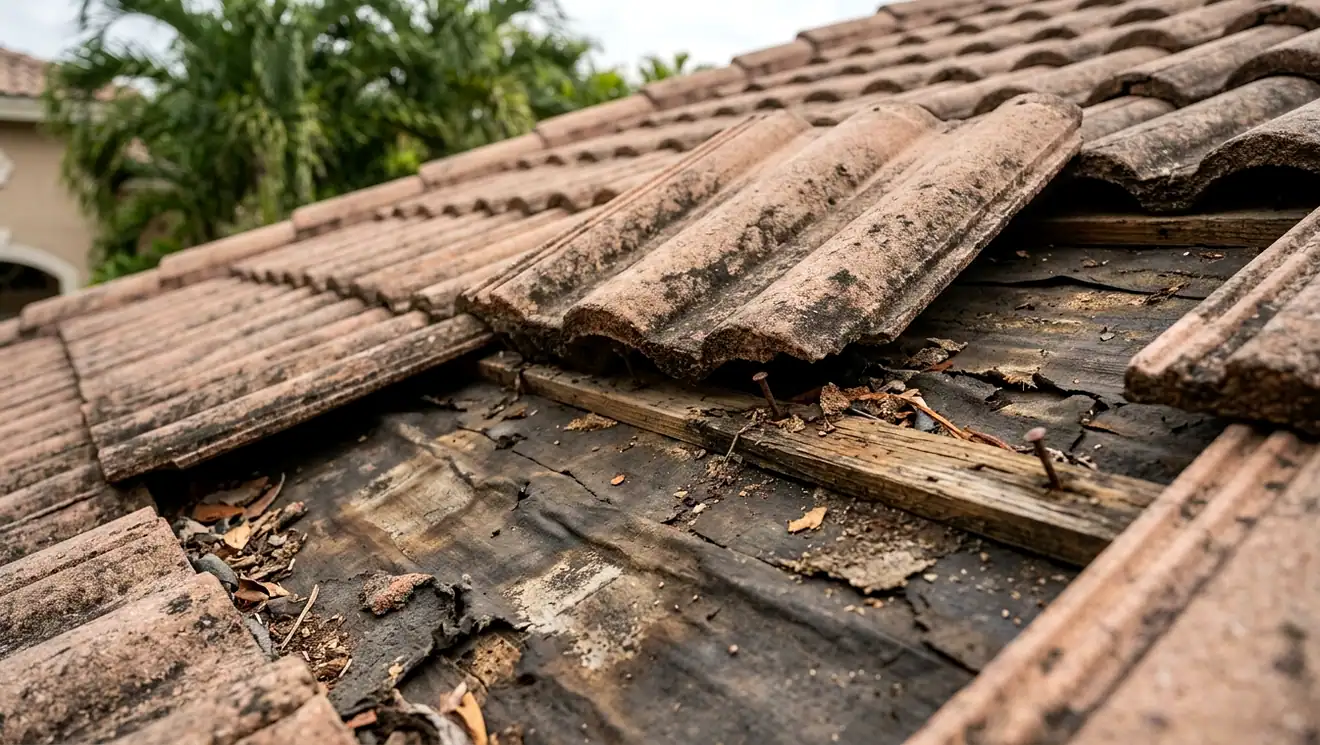
From the ground, look for tiles that have slipped downslope, broken corners and gaps along hips and ridges. Slipped tiles often mean the fasteners or adhesive beneath them have let go, and they expose underlayment to sun, which speeds up its failure. Cracked tiles also let more water reach the layer below.
During an inspection, a roofer will lift a few tiles to check the underlayment directly. Brittle felt that cracks when bent, torn or missing pieces at the eaves, dried out seams and deteriorated flashing at valleys and walls all point to an underlayment near the end of its life.
Why patching often does not last
When underlayment is brittle across the whole roof, fixing one leak usually just moves the problem a few feet. Lifting tile to patch old felt can crack the surrounding material, and the next storm finds the next weak spot. Repairs make sense for isolated damage on a roof with healthy underlayment overall.
Once you see leaks in more than one area, or the felt crumbles when handled, replacement is usually the better use of money. It is also the point where you can add deck re-nailing and a secondary water barrier. Doing both at once avoids paying to remove and reset the tile twice.
Lift and relay or new tile
Underlayment replacement can often reuse your existing tile. The crew removes and stacks the tile, replaces the underlayment and flashings, then reinstalls the tile with approved fasteners or adhesive and replaces broken pieces. If your tile is discontinued, faded or heavily damaged, new tile may make more sense. Typical underlayment replacements here run about $18,700 to $34,900.
Aurora Shield can lift sample tiles, show you photos of the underlayment and explain which route fits your roof. Call (754) 226-1055 any time, 24/7. The final price is set after an on-roof look. Ask to see the photos before you decide, and keep them with your home records.
On a tile roof, the underlayment is what keeps water out, and it wears out decades before the tile. Recurring ceiling stains, attic water tracks, slipped tiles and brittle felt are the main signs. When failure is widespread, replacing the underlayment and reusing sound tile beats repeated patching.
Questions readers ask
Sometimes. Many common concrete tile profiles are still made, but colors fade and some lines are discontinued. Crews often salvage spare tiles from less visible areas like a back slope to repair the front, then use the closest new match out of sight. Ask to see samples before work starts.
Check the permit history for your address. If there is no reroof permit since the house was built, the underlayment is very likely original. An inspector can confirm by lifting a few tiles, and the type of felt and fasteners often show the era it was installed.
Storm & Roof Guides Editor at Aurora Shield Roofing Contractors. Writes the storm and roof guides from the questions homeowners ask on the phone line, and has the field crews check each one.