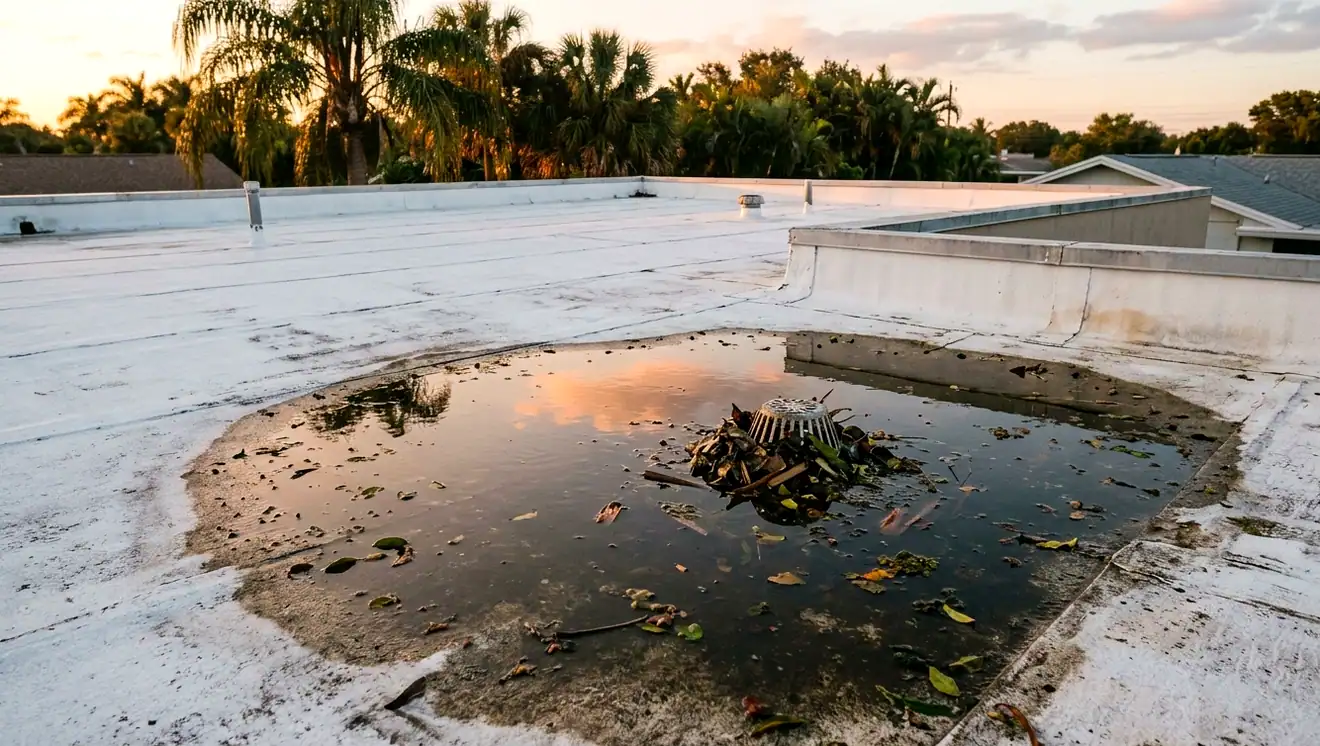
When standing water becomes a problem
Some water on a flat or low slope roof right after a storm is normal. The common industry yardstick is 48 hours: if water is still standing two days after rain in typical drying weather, it is considered ponding. In our summer pattern of afternoon storms, a pond may never fully dry before the next rain arrives.
Ponds are easy to spot once you know the signs. Look for rings of dirt or algae, darker patches on the membrane and areas where debris always seems to collect after it rains. Ponds near drains usually point to a blockage, while ponds in the middle of a roof often mean low spots.
Why ponding shortens roof life
Standing water magnifies UV exposure and keeps the membrane wet through daily heat cycles, which speeds up aging of many materials. Seams under water stay stressed, and any small opening becomes a steady leak. Dirt and algae collect in ponds and break down surfaces further.
Water is heavy, about five pounds per square foot per inch of depth. A pond can make the deck sag a little more each time, which deepens the low spot and holds even more water next storm. Ponds also breed mosquitoes, which no one in South Florida needs more of.
Common causes on local homes and buildings
Most ponding has one of a few causes. Many South Florida homes have a flat section over a Florida room, garage or addition, often added years after the main house with very little slope. Small commercial buildings tend to have long runs to a few drains, so any blockage backs water up fast.
Finding the cause matters, because the fix depends on it. A coating will not fix a clogged drain, and clearing a drain will not fix a sagging deck. Many roofs have more than one cause working together, so a careful inspection looks at drains, slope and deck condition before any repair is priced.
- Clogged drains, scuppers or gutters from leaves and debris
- Too little slope designed into the roof
- Deck sag or crushed insulation creating low spots
- Drains set too high after added roof layers
- Equipment or curbs blocking water flow
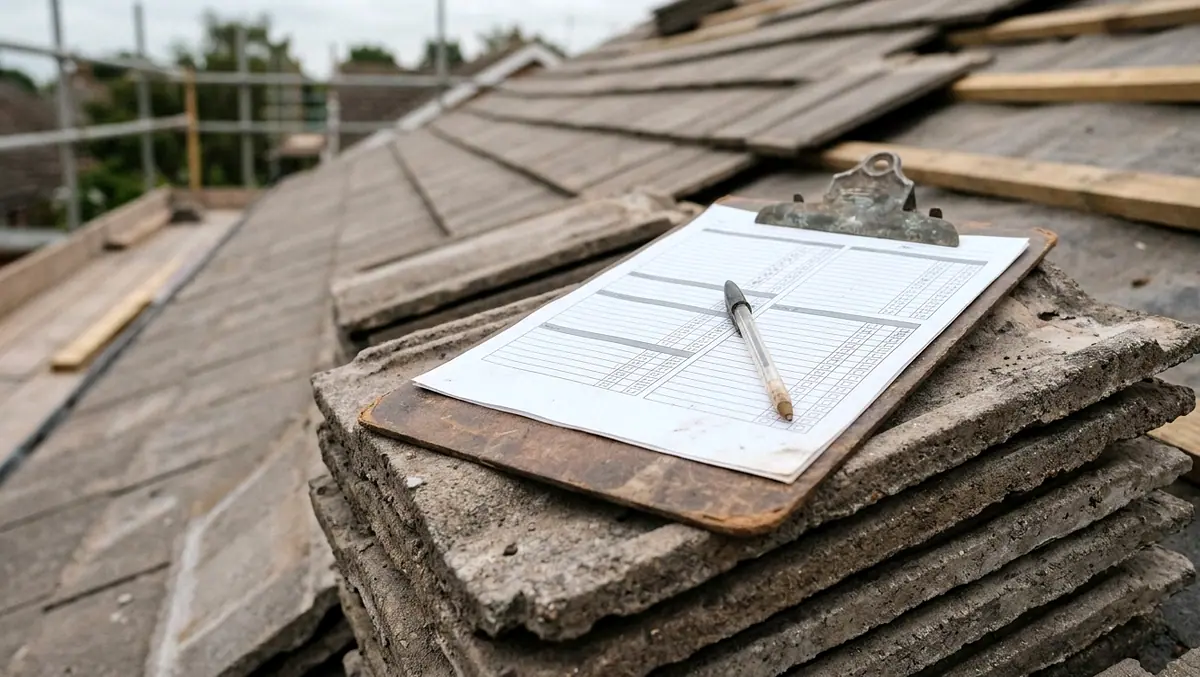
Checks you can make safely
Only go on a flat roof if you have safe access, dry conditions and stable footing, and never during or right after a storm. Often you can see enough from a window, a second story or a ladder at the edge. Note where water sits, how deep it looks and how long it takes to clear.
Check that downspouts and scuppers are flowing during rain. Take dated photos a day and two days after a storm. That record helps a roofer separate a drain problem from a slope or deck problem. Leave the actual clearing of drains on the roof to someone with safe access.
Fixes that actually work
Sometimes the fix is simple: clearing drains and scuppers, adding strainers and keeping them clean. Typical drain and scupper work runs about $265 to $740. When the roof itself is too flat, a crew can add crickets or tapered insulation to steer water to drains, which typically costs $1,180 to $3,460 for a residential section.
Where low spots come from damaged decking, the deck has to be repaired before any new surface goes on. Adding a drain or scupper in the right place can also solve chronic ponds. Final prices are set after an on-roof look. Each fix should be permitted where required.
Where coatings fit in
Silicone roof coatings tolerate standing water better than many other coatings and can extend the life of a sound membrane. They are not a cure for poor drainage, and a coating over a deep pond only buys time. Many manufacturers also limit coating use where ponding is severe, so read their guidance.
Aurora Shield looks at drainage, slope and deck condition before recommending a coating, TPO or repair on flat roofs across Broward, Miami-Dade and southern Palm Beach. Call (754) 226-1055 any time, 24/7, to schedule a look. That way the fix matches the real cause instead of just the symptom.
Water still standing on a flat roof 48 hours after rain is ponding, and it shortens membrane life, adds weight and causes leaks. Most cases come from clogged drains, too little slope or deck sag. Fix the cause first with drain work, crickets or deck repair, then consider coatings.
Questions readers ask
It can be, but not always. New roofs sometimes inherit low spots from an uneven deck that was not corrected, and drains may sit too high after insulation is added. Note where water sits and how long it stays, take dated photos and ask the installer to review drainage before small ponds grow.
Please do not. Cutting into a roof edge or membrane without proper flashing creates a leak and can damage the wall below. A scupper has to be sized, flashed and tied into the membrane correctly. If a pond sits near the edge, have a roofer add a proper scupper there instead.
Storm & Roof Guides Editor at Aurora Shield Roofing Contractors. Writes the storm and roof guides from the questions homeowners ask on the phone line, and has the field crews check each one.