Flat roofs & coatings
Modified bitumen roofing in Pembroke Pines, FL
Your low-slope roof over the garage, Florida room or patio is cracked and blistered, and you need a tough membrane that handles foot traffic.
- Open 24/7
- Based on Hiatus Road
- HVHZ-rated materials
- Real person on the line
- Visit booked on the same call
- Photos of what we find
Quick answer
Modified bitumen is an asphalt membrane reinforced with polyester or fiberglass and blended with rubber or plastic polymers. It goes down in two or more plies: a base sheet and a granulated cap sheet. It is durable, easy to repair and common on Florida flat roofs. Typical installs run $8.70 to $14.30 per square foot. Call (754) 226-1055 day or night for an on-roof look.
Modified bitumen roofing around Pembroke Pines
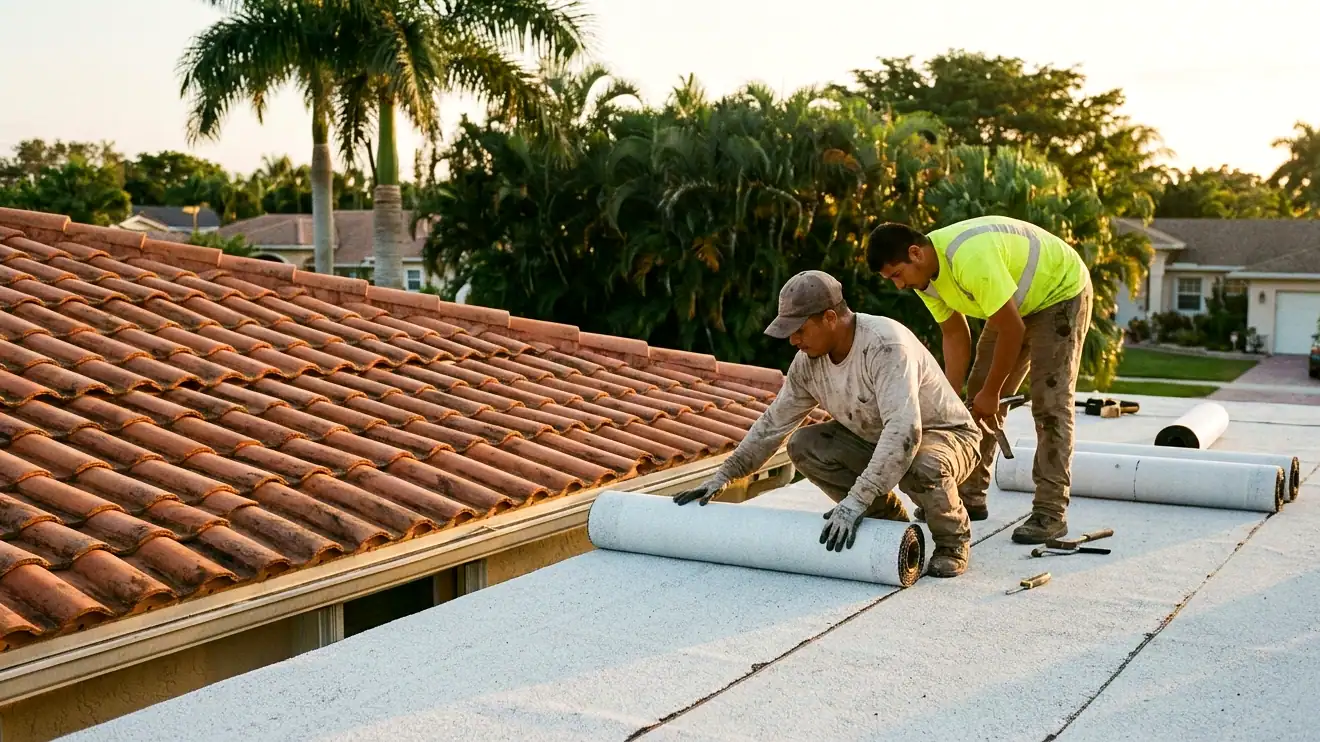
Many flat and low-slope roofs in Pembroke Pines were built with modified bitumen, especially on Florida rooms, garage additions and the flat sections between tile slopes. It is a multi-ply system, so a scuff in the top layer does not automatically mean a leak. The granulated cap sheet protects the asphalt from UV and comes in white for lower heat gain.
Modern mod bit systems in the HVHZ are often self-adhered or cold-applied, which avoids open torches near wood framing and stucco. The base sheet is fastened to the deck or adhered to insulation, then the cap sheet is laid with staggered laps. Wall flashings are built from the same material, so the whole roof ages together and can be patched with matching product years later.
When to call
Signs it is time for modified bitumen roofing
Alligator cracking on surface
The old roof shows a cracked pattern like dried mud, a sign UV has broken down the asphalt and water can start seeping in.
Exposed base sheet
Granules have washed off the cap sheet in patches, and the black asphalt or reinforcing mat now shows through underneath.
Blisters and soft spots
Raised bubbles or spongy areas point to trapped moisture between plies or wet insulation that needs to be removed and replaced.
Roof gets foot traffic
AC technicians, solar crews or you yourself walk the roof often, and you need a thick membrane that tolerates regular foot traffic.
Flat sections between tile
Low-slope areas between tile slopes are leaking where the old rolled roofing meets the tile underlayment at the transition.
Separated laps at edges
Seams along the roof edge have curled open, letting wind lift the sheet and drive rain underneath during storms.
How the job runs
What happens on your roof
- 01
Inspect layers and deck
We check how many old layers exist, probe for wet areas and confirm the deck condition before choosing the approved assembly for your roof.
- 02
Remove and prep
Old roofing comes off to the deck, wet or rotted wood is replaced, and the surface is cleaned and primed where the system requires it.
- 03
Base sheet install
The base sheet is mechanically fastened to the HVHZ pattern or adhered to insulation, with laps staggered and rolled tight by hand.
- 04
Granulated cap sheet
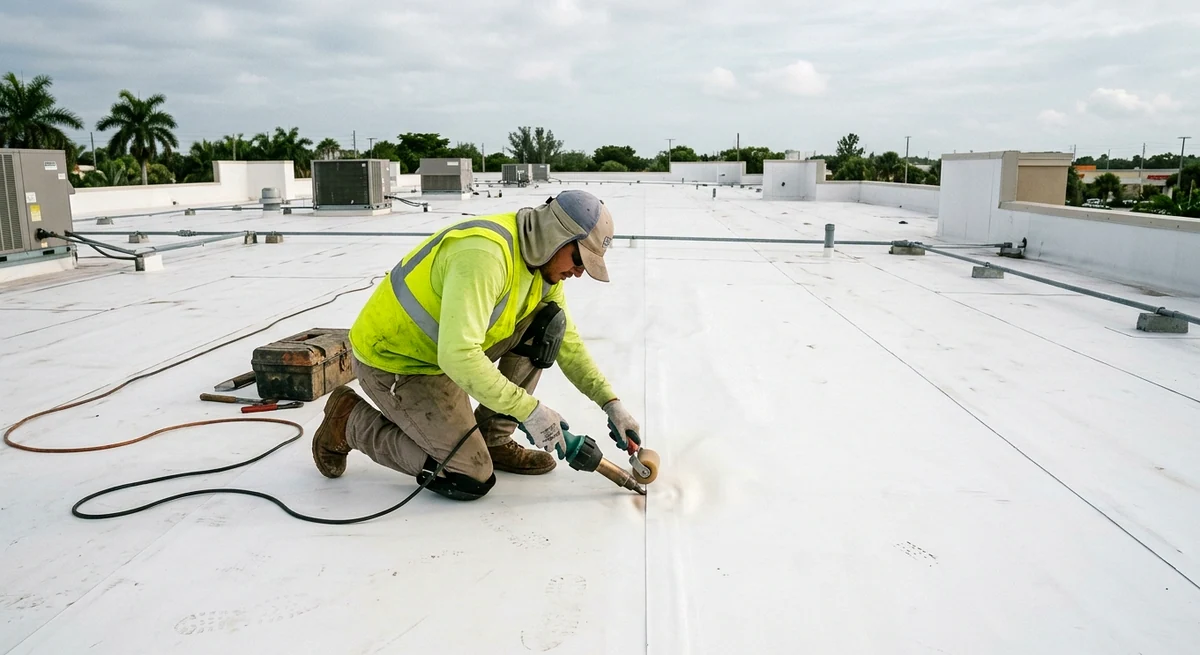
The cap sheet is self-adhered, cold-applied or heat-welded over the base, with side and end laps offset so no seams line up.
- 05
Flashing and edge metal
Walls and curbs get mod bit flashing plies, new drip edge and gravel stop are set, and the final inspection closes the permit.
Local factors that change this job
Modified bitumen systems in Broward must follow their Miami-Dade NOA, which lists the base sheet, cap sheet, fastening and any insulation. Torch-applied work near wood framing raises fire risk, so self-adhered and cold-applied systems are often chosen on homes. Many Pembroke Pines tile roofs have flat crickets and valleys done in mod bit, and those transitions are where leaks start during summer downpours. White granulated cap sheets help cut heat gain under the strong Broward sun.
Your options
Choices worth understanding first
Self-adhered two-ply
Peel-and-stick base and cap sheets with no flame or hot asphalt. Clean, safe around wood framing, and the most common choice on residential flat roofs.
Heat-welded cap sheet
The cap sheet is welded to the base with a torch or hot air for strong lap bonds. Done carefully, with a fire watch, on suitable decks only.
White granulated cap
A reflective white mineral surface that lowers roof temperature compared with black or gray cap sheets, useful over bedrooms and Florida rooms.
SBS or APP modifiers
SBS sheets stay flexible and are often self-adhered or cold-applied, while APP sheets are torch-applied and handle high heat well. The NOA decides which fits.
Typical cost
What modified bitumen roofing costs in Pembroke Pines
| Two-ply self-adhered mod bit, installed | $8.70 to $12.60 per sq ft |
| Heat-welded cap over base, installed | $9.80 to $14.30 per sq ft |
| Wet insulation replacement | $3.15 to $5.90 per sq ft |
| Flat-to-tile transition rebuild | $680 to $2,450 per transition |
The number of plies, insulation and tear-off depth move the price most. Self-adhered systems cost a bit more in material but less in setup, and white cap sheets cost slightly more than standard colors. Small roofs, many penetrations and tie-ins to tile slopes add labor. The final price is set after an on-roof look and a check of the existing layers. Compare every service on the roofing price guide.
Questions
Modified bitumen roofing questions we hear
It can be done safely by careful crews on the right deck, but open flame near wood nailers, eaves and attic vents is a real fire risk. That is why most residential mod bit work in Broward now uses self-adhered or cold-applied sheets. We choose the method based on deck type, roof location and the approved NOA.
Look at the surface. Modified bitumen usually has a gritty, sandpaper-like granule coating, often white, gray or tan, and feels thick and flexible. TPO is a smooth, rubbery white sheet with welded seams that look like flat ribbons. Older built-up roofs often have loose gravel on top instead.
Mod bit is one of the easiest membranes to repair. Punctures, small blisters and open laps can be cut out and patched with matching material. When cracking covers large areas, the cap sheet is worn through, or wet insulation turns up in several spots, a full replacement becomes the better value.
A two-ply modified bitumen roof usually lasts 15 to 22 years here with routine care. Sun and ponding water wear it fastest. A white cap sheet, clear drains and occasional granule touch-ups extend its life. Some owners add a silicone coating near the end of service life to buy extra years before replacement.
Related work
Often booked with this service
Flat Roof Repair
Water sitting on a flat roof for days after a storm finds every weak seam and drain gap, then shows up as a stain over the Florida room.
See this serviceSilicone Roof Coating
Your flat or metal roof is worn but still dry underneath, and you want to add years of life without paying for a full tear-off.
See this serviceTile Roof Repair
Cracked, slipped or loose tile leaves the underlayment open to sun and rain, and on a South Florida roof that exposed spot is where the next leak starts.
See this serviceMore flat roofs & coatings services
Where we do this work most
Leak, storm damage or a roof that is simply getting old?
Call the roof line any hour. A real person answers, asks what you are seeing and sets the next step.