Storm & emergency
Storm damage roof repair in Pembroke Pines, FL
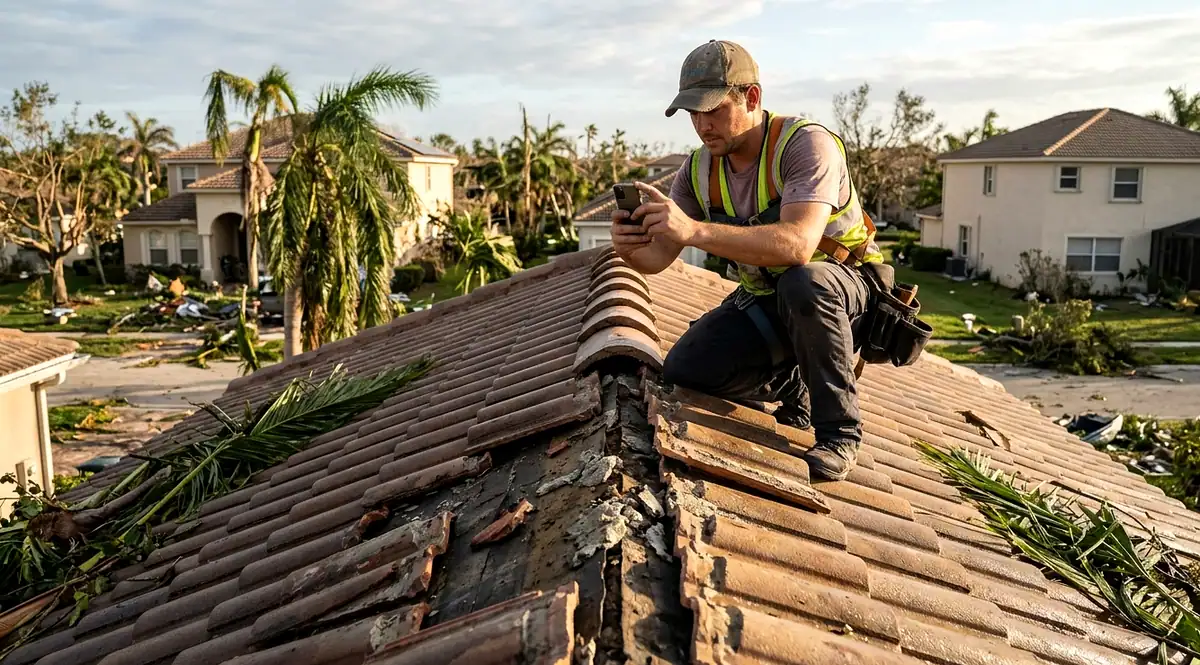
After a tropical storm passes, damage can hide in plain sight, from loose tile that looks fine from the driveway to underlayment torn where wind got under the edges.
- Open 24/7
- Based on Hiatus Road
- HVHZ-rated materials
- Real person on the line
- Visit booked on the same call
- Photos of what we find
Quick answer
Storm damage roof repair fixes what wind, flying debris and wind driven rain did to your roof: lifted or broken tile, torn shingles, bent flashing, damaged ridges and wet decking. Call after any named storm or strong squall, even without leaks. Typical repairs run $685 to $4,270 depending on scope. Call (754) 226-1055, answered 24/7.
Storm damage roof repair around Pembroke Pines
Pembroke Pines sits far enough inland to escape storm surge, but tropical storms and hurricanes still bring sustained winds and gusts that test every roof. Concrete tile can lift and crack, especially at hips, ridges and rake edges. Shingles crease and tear off. Wind also drives rain under laps and into flashing, so a roof that did not lose a single piece can still take on water.
Storm repair starts with a full inspection, not just the spot that leaked. We check every slope, the ridges and edges, the flashings, and the attic for wet decking. Then you get a written scope that separates urgent work from items that can wait. Repairs use HVHZ approved materials and follow the permit rules that apply to your roof's age.
When to call
Signs it is time for storm damage roof repair
Loose or rocking tile
Tile that shifts when touched has broken its adhesive or mortar bond in the wind and may blow off in the next storm.
Displaced ridge caps
Ridge and hip tiles take the strongest uplift, so gaps or missing caps show the ridge is now open to rain.
Debris impact marks
Chipped or punctured tile and dented metal show where branches or flying debris struck the roof during the storm.
Torn underlayment edges
Flapping underlayment at the eaves or rakes means wind got under the covering and lifted the edge.
New leaks after the storm
Any new drip or stain after a named storm points to damage that needs checking before the next band of rain.
Neighbors with visible damage
If houses around you lost tile or shingles, your roof faced the same wind, even if nothing shows from the ground.
How the job runs
What happens on your roof
- 01
Full roof walk
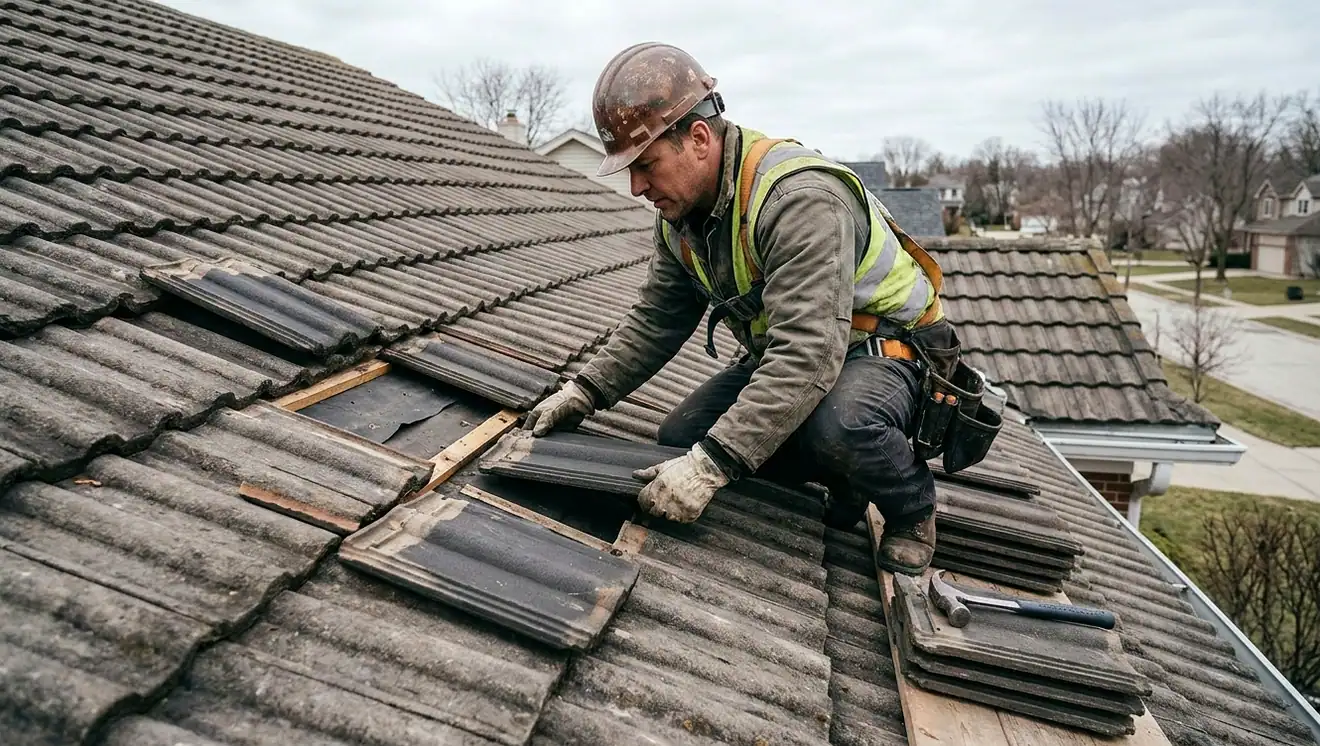
We walk every slope, ridge and edge, checking tile bonds, shingle seals, flashing and penetrations rather than only the leaking area.
- 02
Attic inspection
In the attic, we look for wet decking, light coming through gaps, and water trails that reveal hidden storm openings.
- 03
Prioritized written scope
You receive a written list with photos, sorting urgent repairs from secondary items, along with prices for each part of the work.
- 04
Repair to current code
Damaged tile, shingles, underlayment and flashing are replaced with HVHZ approved materials, with permits pulled when the scope requires them.
- 05
Final check and photos
After repairs we recheck the ridges and edges, clean all debris, and provide photos of the finished work for your records.
Local factors that change this job
Hurricane season runs from June 1 to November 30, and even weaker tropical storms bring gusts strong enough to lift tile on older Pembroke Pines roofs. Mortar set ridges from the 1980s and 1990s often fail first. For storm repairs on roofs built before the 2007 Florida Building Code, repairing 25 percent or more can trigger full replacement, while newer roofs only need the repaired portion brought up to code. Post storm demand is heavy across Broward, so book an inspection early.
Your options
Choices worth understanding first
Targeted storm repair
When damage is limited to certain slopes or ridges, we replace only the affected tile, underlayment and flashing, keeping the rest of a sound roof in place.
Ridge and hip rebedding
Storms often strip mortar ridges. Rebedding them with an approved foam or mechanically fastened ridge system improves wind resistance over the old mortar.
Partial versus full replacement
If damage approaches the 25 percent threshold on an older roof, we lay out both repair and replacement costs so you can see which makes more sense.
Hidden damage follow up
Some damage, like a cracked tile under an intact one, shows up later. We can schedule a follow up check after the next heavy rain.
Typical cost
What storm damage roof repair costs in Pembroke Pines
| Replace wind damaged tile, per 25 tiles | $685 to $1,420 |
| Ridge and hip rebedding, per 20 feet | $540 to $1,180 |
| Underlayment replacement, per 100 sq ft | $910 to $1,860 |
| Deck repair after a debris strike | $420 to $1,370 |
Storm repair costs depend on how many slopes are damaged, how much tile or shingle needs replacing, underlayment and deck condition, ridge rebuilding, material availability after storms, and whether the 25 percent rule applies to your roof. The final price is set after an on-roof look, and you see each item in writing before approving. Compare every service on the roofing price guide.
Questions
Storm damage roof repair questions we hear
Wind can break the bond under tile without lifting it off. From the ground, look for tile rows that are out of line or ridge caps with gaps. Inside, check for new stains. The surest way is an on-roof inspection, where a roofer gently tests tile for movement and checks the attic for wet decking.
As soon as it is safe to have someone on the roof. Hidden damage gets worse with every rain, and afternoon storms keep coming through the rest of the season. Early inspection also helps you plan repairs before demand peaks and material deliveries slow down across South Florida.
Not always. If the roof was built before the 2007 code and 25 percent or more needs repair, Florida rules can require full replacement. Smaller damage can simply be repaired. We look at your permit history and the extent of the damage, then show you where your roof falls.
Yes. Many older roofs have mortar set ridges that crack and come loose in wind. During storm repairs, we can rebed the ridges with an approved foam or mechanically fastened system that holds up better in high winds. It is a good time to do it, since crews and equipment are already on the roof.
Related work
Often booked with this service
Storm Damage Documentation
After a storm, you need a clear record of what happened to your roof, with photos and a written scope you control and can share with anyone you choose.
See this serviceEmergency Roof Tarping
A properly secured tarp keeps rain out of your home after a storm, while a loose one can flap, tear and pull more tile loose in the next gust.
See this serviceRoof Replacement
Your roof is aging out, leaks keep coming back after each repair, or your insurer wants proof of remaining roof life before it will renew the policy.
See this serviceMore storm & emergency services
Where we do this work most
Leak, storm damage or a roof that is simply getting old?
Call the roof line any hour. A real person answers, asks what you are seeing and sets the next step.