Hurricane hardening
Roof deck re-nailing in Pembroke Pines, FL
Older roof decks were often fastened with staples or widely spaced smooth nails, so hurricane suction can lift whole plywood sheets right off the trusses.
- Open 24/7
- Based on Hiatus Road
- HVHZ-rated materials
- Real person on the line
- Visit booked on the same call
- Photos of what we find
Quick answer
Roof deck re-nailing adds ring-shank nails at closer spacing along every truss so the plywood resists uplift. It is done while the old covering is off during a reroof, before new underlayment goes down. Typical South Florida cost runs $640 to $2,180 on top of the reroof price. Call (754) 226-1055, answered 24/7, to plan it into your project.
Roof deck re-nailing around Pembroke Pines
Wind does not push a roof off so much as pull it. As gusts race over the ridge and eaves, low pressure above the roof tries to lift the deck sheets away from the trusses. If those sheets were held by staples or by nails spaced far apart, an entire section can peel back, taking the roof covering with it and opening the house to rain.
Plenty of Pembroke Pines homes from the 1980s and early 1990s were sheathed before South Florida tightened deck fastening after Hurricane Andrew. The clean way to fix that is during a reroof, when the deck is bare and every truss line can be found and nailed. Your wind mitigation inspector treats roof deck attachment as its own category on the form.
When to call
Signs it is time for roof deck re-nailing
Staples in the attic
Looking up from the attic you see staple points instead of nail tips coming through the plywood above the trusses.
Nails missing the trusses
Fastener tips poke through beside the trusses rather than into them, which means those nails are holding almost nothing.
Spongy spots underfoot
Walking the roof, some areas bounce slightly, a sign that sheets are loose on the framing or the plywood itself is weakening.
Weak deck attachment rating
Your last wind mitigation report placed roof deck attachment in the lowest category or could not verify the nailing at all.
Popped nail heads
Nail heads push up under shingles, creating small bumps that eventually wear through the covering and let water in.
Built before Andrew changes
Your house dates from the 1980s or early 1990s, before stricter South Florida sheathing rules followed Hurricane Andrew.
How the job runs
What happens on your roof
- 01
Expose the deck
After tear-off we sweep the plywood clean and pull protruding old fasteners so the new nails sit flush and the deck lies flat.
- 02
Locate every truss
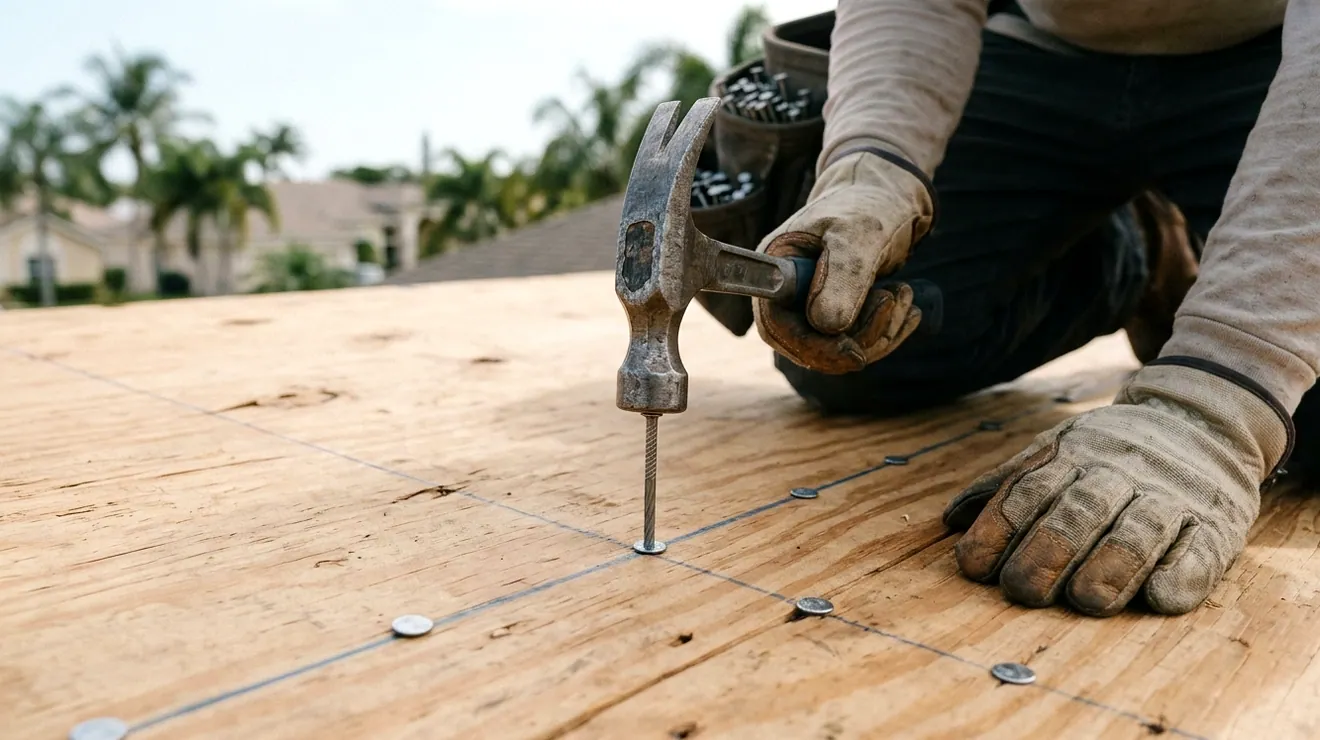
We snap chalk lines along each truss or rafter so every new nail lands in solid framing instead of open air.
- 03
Drive ring-shank nails
Ring-shank nails go in at the spacing current code calls for, closer along sheet edges and roof perimeters where uplift is strongest.
- 04
Check for failed sheets
Delaminated, rotted or cracked plywood is cut out and replaced with new sheathing fastened to the same tighter nailing schedule.
- 05
Record and dry in
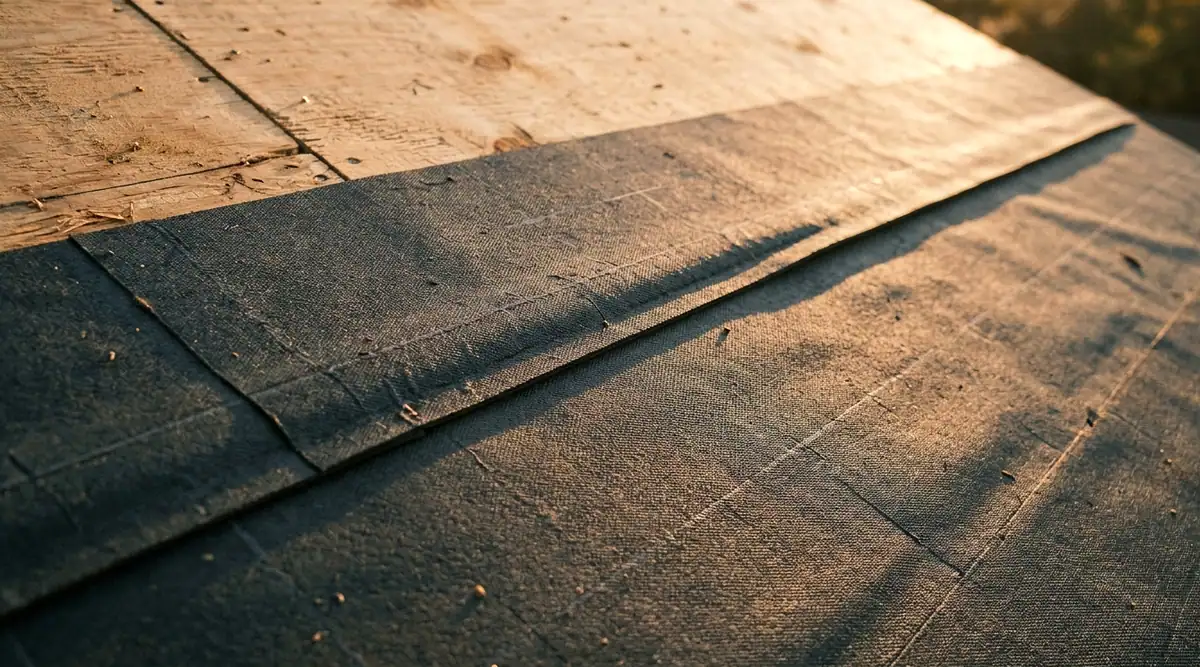
We photograph the nailing pattern and fastener type, then the deck is sealed and covered with underlayment the same day when weather permits.
Local factors that change this job
The High Velocity Hurricane Zone rules that cover Broward set specific nail types and spacing for roof sheathing, and the Pembroke Pines building department checks deck nailing during reroof inspections. Homes in older sections of eastern Pembroke Pines and early lakeside subdivisions are the most likely to have staples or wide spacing. Humid attics also corrode smooth nails over decades, so even a deck that was fastened correctly when built may grip far less today than it did then.
Your options
Choices worth understanding first
Re-nail existing plywood
Your current deck stays in place and gets new ring-shank nails along every framing member. This is the usual choice when the plywood is still sound and flat.
Re-nail plus spot replacement
Sound sheets are re-nailed and damaged sheets are swapped out. It suits roofs with a few soft areas left behind by past leaks around valleys or vents.
Full deck replacement
All sheathing is removed, then new plywood is installed and nailed to current code. Best when the deck is widely damaged or made of thin or spaced boards.
Re-nail with strap upgrade
While the deck is open at the eaves, we can also check and add hurricane straps, tying deck, trusses and walls into one continuous load path.
Typical cost
What roof deck re-nailing costs in Pembroke Pines
| Re-nailing, average single-story home | $640 to $1,290 |
| Re-nailing, larger or two-story home | $1,180 to $2,180 |
| Replacement plywood sheet, each | $93 to $157 |
| Pulling old staples or loose nails | $165 to $430 |
Roof area and the number of truss lines drive most of the cost, along with how many old staples or nails must be pulled first. Plywood that has to be replaced is priced per sheet. Two-story homes and steep pitches take longer to work safely. The final price is set after an on-roof look and confirmed once the deck is bare. Compare every service on the roofing price guide. Wondering where your roof sits on insurers’ age lists? Try the roof age check.
Questions
Roof deck re-nailing questions we hear
Ring-shank nails have ridges along the shaft that lock into the wood fibers, so they resist pulling out far better than smooth nails or staples under the same uplift. That is why South Florida code calls for them on roof sheathing. In a humid attic they also keep their grip as the wood swells and shrinks through the seasons.
Only in a limited way. Nailing from below is awkward, often misses the framing and can split the plywood. Some contractors add adhesive along the trusses from inside, but the fastening your wind mitigation inspector looks for is normally done from above while the deck is exposed during a reroof.
Roof deck attachment is a separate category on the Florida wind mitigation form, and your wind mitigation inspector decides how to classify it based on fastener type and spacing. We photograph the nailing and note the nail size so the inspector has what they need. Whether the result changes your premium depends on your insurer.
Yes. On a permitted reroof in Pembroke Pines, the building department typically inspects the deck before underlayment covers it, and nailing is part of that check. We schedule the inspection and keep the deck protected until it passes, so the new fastening is on record with the permit.
Related work
Often booked with this service
Secondary Water Barrier
When hurricane winds peel off shingles or crack tiles, rain pours through the bare plywood seams and soaks ceilings, insulation and drywall within minutes.
See this serviceHurricane Straps & Roof-to-Wall
If your trusses are held to the walls only by angled toenails or a light clip, strong uplift can pull the whole roof frame off the house.
See this serviceRoof Replacement
Your roof is aging out, leaks keep coming back after each repair, or your insurer wants proof of remaining roof life before it will renew the policy.
See this serviceMore hurricane hardening services
Where we do this work most
Leak, storm damage or a roof that is simply getting old?
Call the roof line any hour. A real person answers, asks what you are seeing and sets the next step.