New roofs & replacement
Standing seam metal roofing in Pembroke Pines, FL
You want a roof that handles hurricane winds, reflects summer heat and outlasts tile underlayment cycles, without exposed screws that loosen over time.
- Open 24/7
- Based on Hiatus Road
- HVHZ-rated materials
- Real person on the line
- Visit booked on the same call
- Photos of what we find
Quick answer
Standing seam metal roofing uses long panels joined by raised seams and fastened with hidden clips, so no screws pierce the weather surface. It handles wind uplift, heat and heavy rain very well and can last 40 years or more. Typical South Florida installs run $17.40 to $29.60 per square foot. Call (754) 226-1055 any hour to arrange an on-roof look.
Standing seam metal roofing around Pembroke Pines
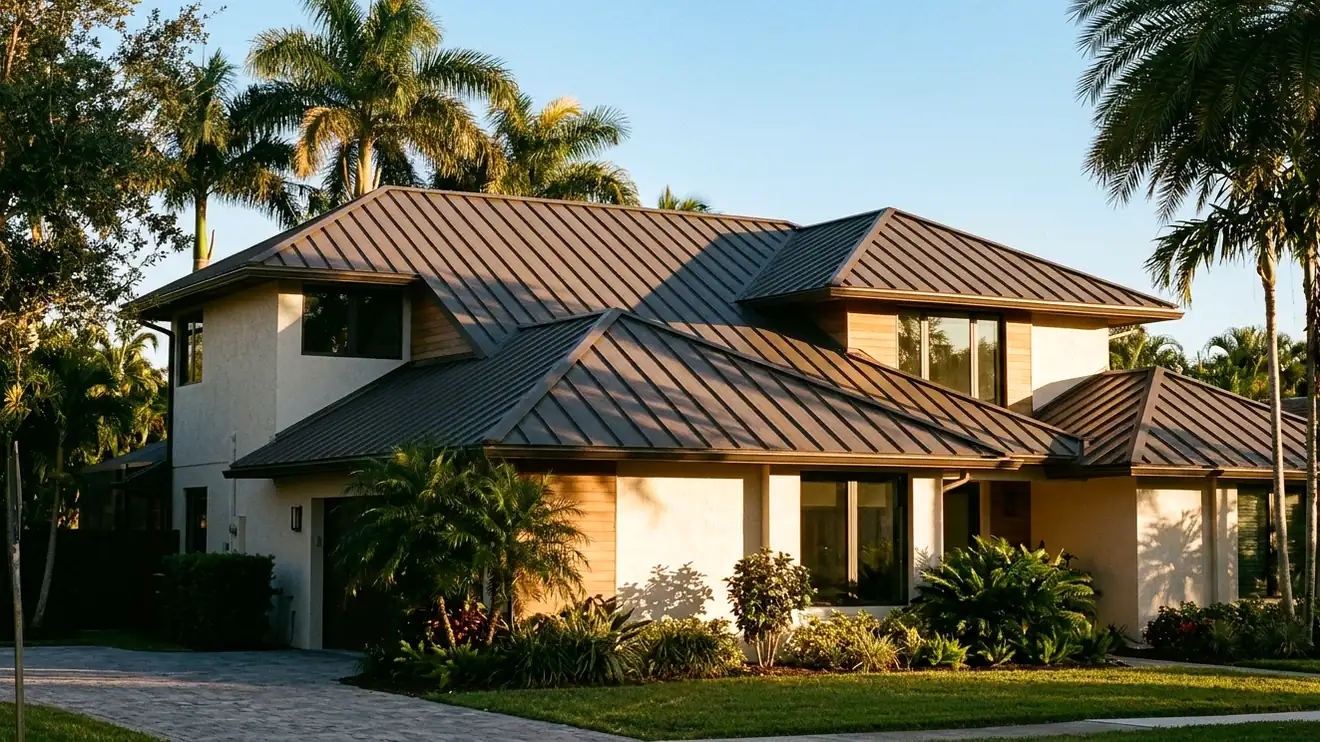
Standing seam has become a common reroof choice in Pembroke Pines for homeowners moving away from shingle or aging tile. On most homes the panels run ridge to eave in one piece, so there are few joints for water to find. Concealed clips let the metal expand and contract through hot afternoons and cooler nights without stressing the fasteners.
Panel choice matters in Broward. Aluminum resists salt air best and suits homes closer to the coast, while Galvalume steel costs less and works well inland. Most homes use 16-inch or 18-inch panels with 1.5-inch or 2-inch seams, roll-formed on site to exact lengths. A high-temperature self-adhered underlayment goes beneath, since metal gets very hot in July sun.
When to call
Signs it is time for standing seam metal roofing
Tired of patching shingle
Your shingle roof has needed repairs every storm season, and you want a covering built to last several decades with little upkeep.
Wind performance first
You want one of the strongest uplift options available, and concealed-clip systems test very well under HVHZ product approvals.
High summer cooling bills
Reflective metal finishes bounce sunlight off the roof, which can lower attic heat and ease the load on your air conditioner.
Planning to add solar
Solar rails clamp onto the standing seams without drilling holes, which makes metal a clean match for a future solar array.
Modern home design
A clean, linear roof profile suits contemporary and coastal-style homes better than tile or shingle and opens more color choices.
Low-slope sections included
Porch or addition areas with lower pitch can often take standing seam where shingle and tile would not meet minimum slope rules.
How the job runs
What happens on your roof
- 01
Panel and finish selection
You choose aluminum or Galvalume, panel width, seam height and a paint color, and we confirm the system's NOA fits your roof geometry.
- 02
Tear-off and deck prep
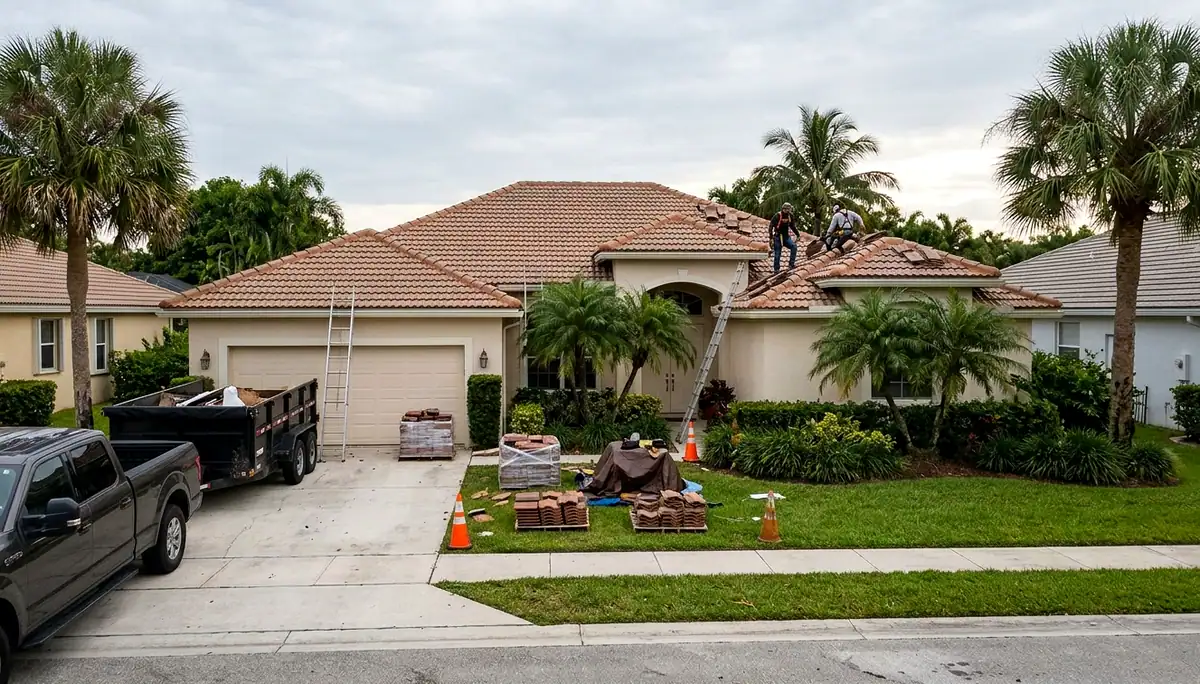
The old roof is removed, the deck is repaired and re-nailed, and roof edges are checked so the panels will sit flat and straight.
- 03
High-temp underlayment
A high-temperature self-adhered underlayment covers the deck, sealed at valleys and penetrations, and the dry-in inspection passes before panels arrive.
- 04
On-site panel forming
Panels are roll-formed on site to exact ridge-to-eave lengths, then fastened with concealed clips spaced to the NOA uplift schedule.
- 05
Seaming, trim and final
Seams are mechanically locked or snapped together, ridge, hip and eave trim is installed, and the final inspection closes out the permit.
Local factors that change this job
Standing seam systems in the HVHZ are approved as a complete assembly, so the panel, clip, clip spacing and underlayment must all match the Miami-Dade NOA. Broward inspectors check clip spacing at edges and corners, where wind pressure peaks. Some Pembroke Pines HOAs still restrict metal or limit its colors, while others have recently added it to approved lists. Summer heat makes high-temperature underlayment a must, and aluminum is the safer metal for homes that catch salt air from the coast.
Your options
Choices worth understanding first
Aluminum panels
Aluminum does not rust and handles salt air best. It costs more than steel and is the usual pick for homes in eastern Broward or near the Intracoastal.
Galvalume steel panels
Zinc and aluminum coated steel at a lower price. A strong fit for inland Pembroke Pines homes where salt exposure is light and budget matters.
Mechanical lock seams
Seams folded with a seaming tool to 1.5 or 2 inches tall. They carry the highest uplift ratings and are standard on many HVHZ-approved systems.
Snap-lock seams
Panels snap together without a seaming tool, which installs faster at lower cost. Used where the approved system and the wind pressure calculations allow it.
Typical cost
What standing seam metal roofing costs in Pembroke Pines
| Galvalume standing seam, installed | $17.40 to $23.80 per sq ft |
| Aluminum standing seam, installed | $22.60 to $29.60 per sq ft |
| High-temp self-adhered underlayment | $1.95 to $3.40 per sq ft |
| Custom trim, ridge and valley metal | $1,480 to $4,860 per roof |
Metal type is the biggest factor, with aluminum costing more than Galvalume. Panel width, seam height and paint finish also matter, and complex roofs with many hips, valleys and dormers take more trim and labor. Tearing off tile costs more than removing shingle. The final price is set after an on-roof look and a measured panel layout. Compare every service on the roofing price guide.
Questions
Standing seam metal roofing questions we hear
Not noticeably on a home. Standing seam goes over a solid plywood deck and underlayment, with attic insulation below, so rain sounds much like it does on shingle. The loud metal roofs people remember are usually open-framed barns or carports with no deck. Extra attic insulation quiets it further if you are sensitive to noise.
No. Metal does not raise the chance of a strike. If lightning does hit, a metal roof is noncombustible and spreads the energy across a wide surface, which lowers fire risk compared with combustible roof coverings. Florida sees frequent summer lightning, and metal roofs perform fine through it.
Most Pembroke Pines homes use 16-inch or 18-inch panels. Narrower panels reduce oil canning, the slight waviness visible on flat metal, and some NOAs limit width in high-wind areas. Seam height is usually 1.5 or 2 inches, and the taller seam handles low slopes better. The approved system for your roof sets the final combination.
A permitted reroof updates the roof covering and secondary water resistance items on the wind mitigation form, and re-nailing the deck to current code can improve the deck attachment category. Any premium change is up to your insurer. We give you the permit record and photos so the inspector can document what was installed.
Related work
Often booked with this service
Metal Roof Repair
Metal roofs handle South Florida wind well until a fastener backs out, a seam opens, or salt air starts to rust a cut edge, and then leaks follow quickly.
See this serviceSolar Panel Removal & Reinstall
Your roof needs replacing but solar panels cover a large part of it, and you are not sure who should remove them or how they go back on safely.
See this serviceHurricane Straps & Roof-to-Wall
If your trusses are held to the walls only by angled toenails or a light clip, strong uplift can pull the whole roof frame off the house.
See this serviceMore new roofs & replacement services
- Roof Replacement
- Concrete Tile
- Clay Barrel Tile
- Shingle Roofing
- 5V Crimp Metal
- New Construction
- Patio & Porch Roofs
- Mobile Home Roofs
Where we do this work most
Leak, storm damage or a roof that is simply getting old?
Call the roof line any hour. A real person answers, asks what you are seeing and sets the next step.