Roof repair
Roof repair in Pembroke Pines, FL for every roof type
A small roof problem in South Florida rarely stays small, because every afternoon storm pushes more water past the cracked tile, lifted shingle or tired flashing you cannot see.
- Open 24/7
- Based on Hiatus Road
- HVHZ-rated materials
- Real person on the line
- Visit booked on the same call
- Photos of what we find
Quick answer
Roof repair fixes a specific failure, such as a leak, cracked or slipped tile, lifted shingles, rusted flashing or a soft spot, without replacing the whole roof. You need it when you see stains, debris or loose pieces after a storm. Typical South Florida repairs run $465 to $1,840, with bigger tile or deck work costing more. Call (754) 226-1055, answered 24/7.
Roof repair around Pembroke Pines
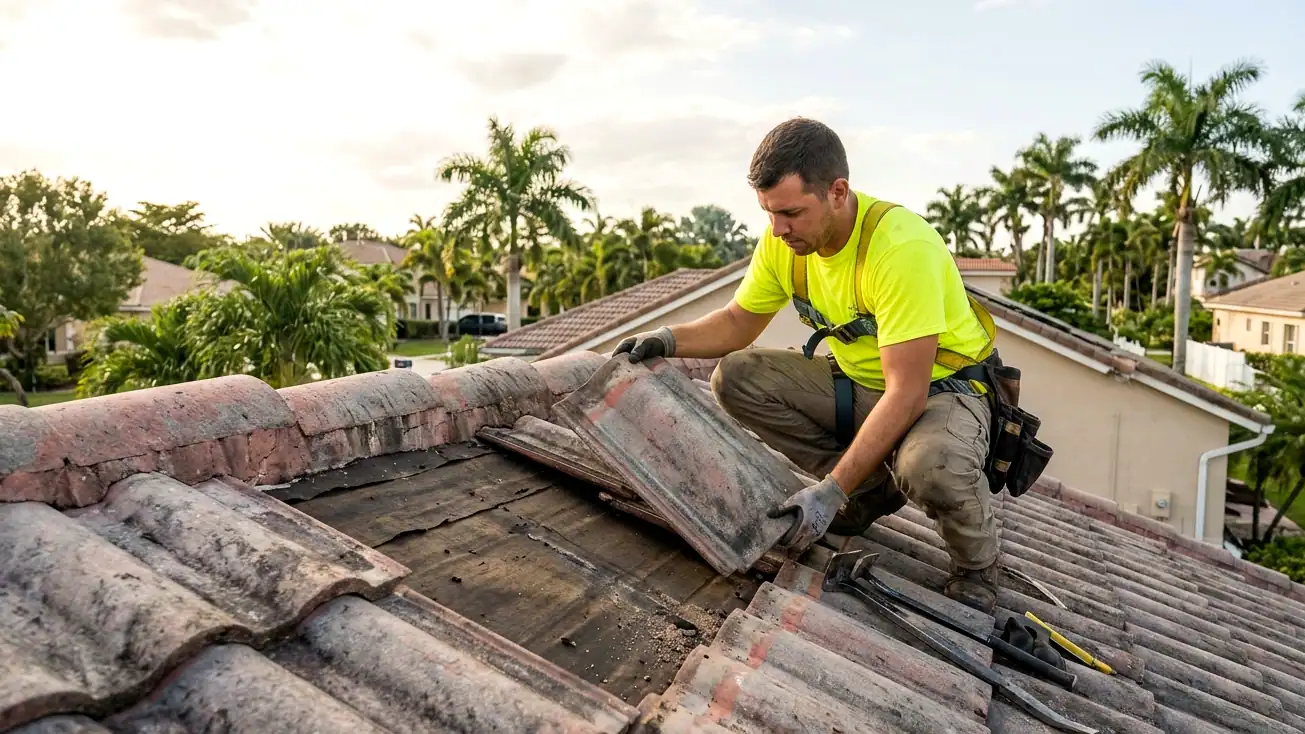
Most homes in Pembroke Pines carry concrete tile over the main roof, with a flat section over a porch or Florida room. Each surface fails differently. Tile cracks under foot traffic or flying debris, shingles lift at the edges in gusty storms, and flat sections pond water around drains. A good repair starts by finding which surface is actually letting water in, since the stain inside is often several feet from the source.
Aurora Shield crews trace the water path from the ceiling stain back up to the roof, open only what needs opening, and match the repair to the existing system. In Broward that means approved materials for the High Velocity Hurricane Zone, correct fastening, and a permit when the scope calls for one. You get photos of the problem and the finished fix, so you can see exactly what changed.
When to call
Signs it is time for roof repair
Ceiling or wall stains
Brown rings on drywall or peeling paint near the ceiling line mean water has already passed the underlayment and reached the interior.
Cracked or slipped tile
Broken tile pieces in the yard or gaps in a tile row leave the underlayment exposed to direct sun and rain.
Lifted or missing shingles
Shingle tabs that flap in wind or lie in the grass after a storm let water reach the deck and its fasteners.
Rust at metal edges
Orange streaks below drip edge, valley metal or vent flashing show corroding metal that will soon open at the seams.
Soft spots underfoot
A roof deck that flexes when walked on usually means the plywood has absorbed water for months and started to delaminate.
Attic daylight or damp insulation
Pinpoints of light through the roof boards or matted, damp insulation show exactly where the roof is open.
How the job runs
What happens on your roof
- 01
Interior and attic check
We start where the water shows, checking the ceiling, attic framing and decking to narrow the area before anyone climbs onto the roof.
- 02
On-roof inspection
A roofer walks the affected area, lifts tile or shingles as needed, and photographs the underlayment, flashing and fasteners to confirm the true cause.
- 03
Written repair scope
You get a plain description of the problem, the fix, the materials and the price before any work begins, with no pressure to decide on the spot.
- 04
Repair with matched materials
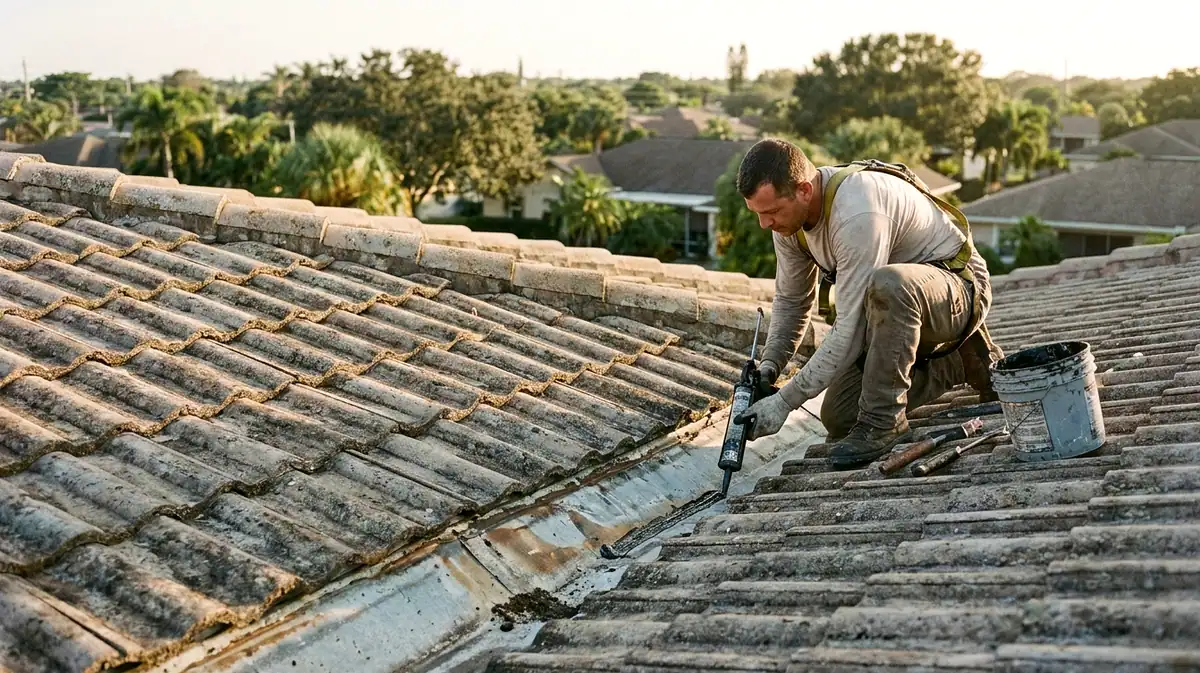
We remove the damaged section, replace underlayment and flashing as needed, then reinstall or replace tile, shingles or membrane using HVHZ approved products.
- 05
Water test and cleanup
When practical we water test the repaired area, clear all debris from the roof and yard, and send you before and after photos.
Local factors that change this job
Broward County sits in the High Velocity Hurricane Zone, so even repair materials should carry a Miami-Dade NOA or equivalent HVHZ approval. Larger repairs need a permit from the Pembroke Pines building department. If your roof was built to the 2007 Florida Building Code or later, only the repaired portion has to meet current code, even past 25 percent. Older roofs fall under the 25 percent rule, which can turn a big repair into a reroof. Afternoon storms from June through September are when hidden damage shows up.
Your options
Choices worth understanding first
Spot repair
Fixes one defined failure, such as a cracked tile or a single leaking vent. It is the most affordable choice when the rest of the roof is sound and has years left.
Section repair
Replaces underlayment and covering across a larger area, often a full slope or valley. It makes sense when damage is concentrated but the roof as a whole is not worn out.
Matched replacement tile
Older tile profiles can be hard to source. We look for matching salvage or close profiles and can move original tile from hidden slopes to the visible front.
Repair versus reroof
If repairs keep coming back or the job nears the 25 percent rule, we show you the numbers for both paths so you can choose with clear costs in hand.
Typical cost
What roof repair costs in Pembroke Pines
| Minor shingle or tile repair, up to 10 pieces | $465 to $890 |
| Leak repair with underlayment patch | $720 to $1,840 |
| Flashing or vent boot replacement | $385 to $960 |
| Deck board replacement, per sheet | $145 to $265 |
The price depends on roof type, height and pitch, how much underlayment is damaged under the visible problem, whether flashing or decking must be replaced, and if a permit is needed. Tile repairs often cost more than shingle because each tile is lifted and reset by hand. The final price is set after an on-roof look, and you see it in writing first. Compare every service on the roofing price guide.
Questions
Roof repair questions we hear
It depends on when the roof was built. Roofs built to the 2007 Florida Building Code or later only need the repaired area brought to current code, even when 25 percent or more is repaired. Older roofs fall under the 25 percent rule, so a large repair may require a full reroof. We check your roof's permit history before quoting.
Water travels along the underlayment, battens and rafters before it drips through. On a tile roof it can run several feet downslope from the broken spot before it finds a gap. That is why we trace the path in the attic first, then confirm the source on the roof instead of patching directly above the stain.
The first heavy afternoon storm is the real test. When conditions allow, we water test the repaired area with a hose before leaving, working from the bottom up. If you see any new staining after rain, call and we will come out to inspect the same area and look at what changed.
Often yes, but with care. The concrete tile itself can last far longer, but the underlayment beneath it is usually reaching the end of its life around this age. A repair can buy time, and we will tell you plainly if the underlayment we see under the lifted tile is brittle enough that replacement is the better spend.
Related work
Often booked with this service
Roof Leak Repair
Water dripping into a bedroom during an afternoon downpour usually enters several feet from the stain, so patching the obvious spot rarely stops the leak for good.
See this serviceRoof Inspection
You are not sure what shape your roof is really in after another storm season, and a small stain or loose tile has you wondering what else is hiding.
See this serviceTile Underlayment Replacement
Your concrete tiles still look solid, but the felt underneath has dried out and cracked after 20 to 30 years, and new leaks appear with each storm.
See this serviceMore roof repair services
- Leak Repair
- Tile Repair
- Shingle Repair
- Flat Roof Repair
- Metal Roof Repair
- Flashing Repair
- Fascia & Soffit
- Skylights
- Mansard Repair
- Truss & Rafter Repair
Where we do this work most
Leak, storm damage or a roof that is simply getting old?
Call the roof line any hour. A real person answers, asks what you are seeing and sets the next step.