Hurricane hardening
Secondary water barrier installation in Pembroke Pines, FL
When hurricane winds peel off shingles or crack tiles, rain pours through the bare plywood seams and soaks ceilings, insulation and drywall within minutes.
- Open 24/7
- Based on Hiatus Road
- HVHZ-rated materials
- Real person on the line
- Visit booked on the same call
- Photos of what we find
Quick answer
A secondary water barrier is a sealed layer over the roof deck, either self-adhered tape over every plywood seam or a full self-adhered membrane, that keeps water out if the roof covering blows off. It is installed during a reroof while the deck is bare. Typical South Florida cost runs $1,180 to $3,960 added to a reroof. Call (754) 226-1055, answered 24/7.
Secondary water barrier around Pembroke Pines
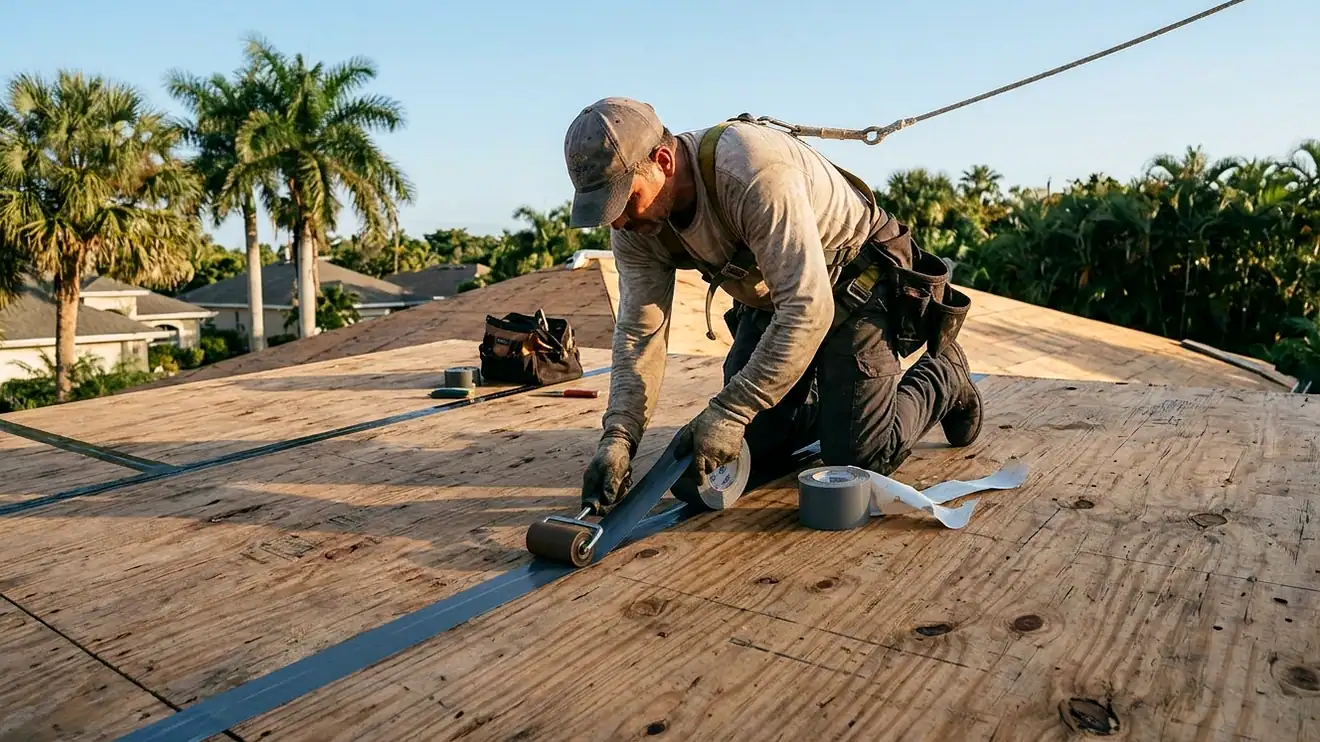
In Broward County, the most expensive part of a hurricane is often not the missing roofing but the water that follows it. Once shingles or tiles are torn away, rain driven sideways at storm speeds finds every gap between plywood sheets. A secondary water barrier closes those gaps, so the deck itself sheds water for the hours or days before a tarp or repair arrives.
Many Pembroke Pines homes from the 1980s and 1990s were roofed with a single layer of felt nailed over the deck, and nothing sealed the seams. The only practical time to add a sealed barrier is when the old roof covering is off during a reroof. Your wind mitigation inspector can then document it under the secondary water resistance category, which some insurers credit.
When to call
Signs it is time for secondary water barrier
Reroof already scheduled
Your roof is due for replacement, which is the one window when the bare deck can be sealed at a modest added cost.
Ceiling stains after storms
Water marks appear on ceilings after strong storms even though no shingles or tiles are visibly missing from the roof.
Original felt underlayment
Your current roof sits on felt from the 1980s or 1990s that has dried out, cracked and lost its grip on the deck.
Wind mitigation shows none
A past wind mitigation report marked secondary water resistance as not present or unknown, leaving that category without credit.
Water tracks along seams
From the attic you can see dark water lines or daylight along the joints between the plywood sheets of the roof deck.
Open exposure to wind
Your home faces open fields, canals or lakes where gusts hit the roof edge with little in the way to slow them.
How the job runs
What happens on your roof
- 01
Strip to bare deck
We remove the old roof covering and underlayment down to the plywood so every seam and fastener is visible and reachable.
- 02
Re-nail and repair deck
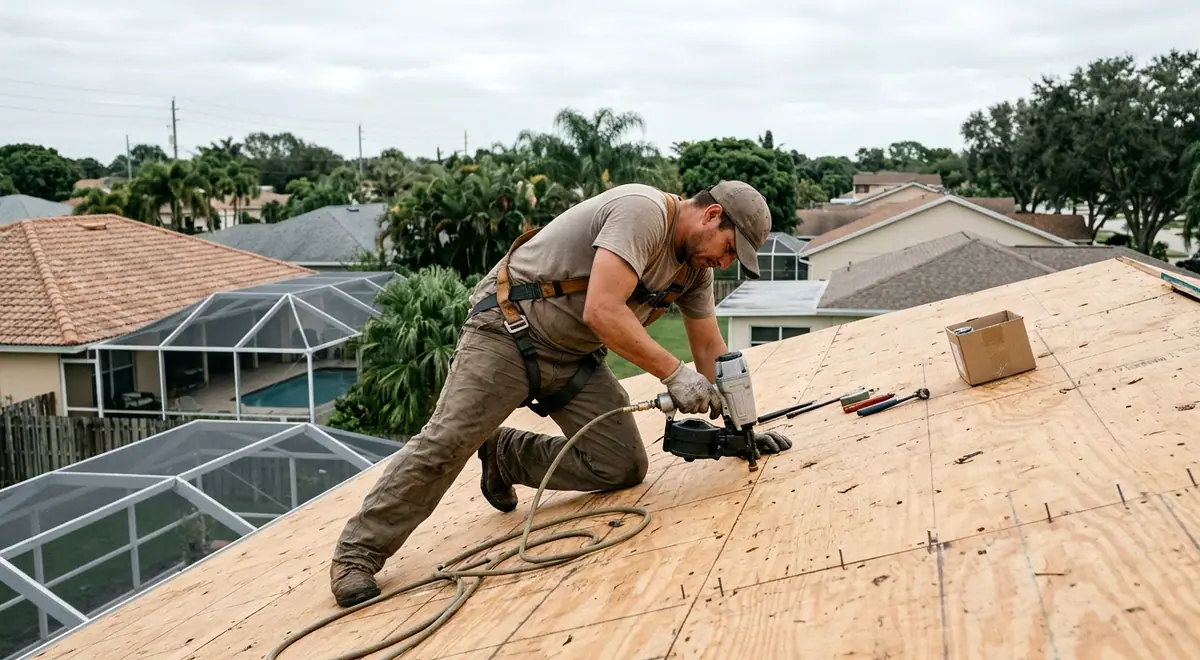
Loose sheets are fastened to current code nailing patterns, and rotted or delaminated plywood is cut out and replaced before any sealing starts.
- 03
Seal every seam
Self-adhered tape at least four inches wide is rolled over each joint, or a full self-adhered membrane covers the whole deck surface.
- 04
Install code underlayment
The underlayment required by the HVHZ product approval goes down over the barrier, lapped and fastened exactly as that approval specifies.
- 05
Photograph the sealed deck
We photograph the barrier before it is covered so your wind mitigation inspector has clear evidence of what was installed and where.
Local factors that change this job
Broward and Miami-Dade sit in the High Velocity Hurricane Zone, so any barrier tape or membrane used here must carry a Miami-Dade NOA or equivalent approval, and the Pembroke Pines building department inspects the work on reroof permits. Western neighborhoods near the Everglades edge see long open stretches of wind during storms, and summer afternoon downpours soak roofs almost daily from June to September. A sealed deck matters most in those conditions because the rain arrives sideways rather than straight down.
Your options
Choices worth understanding first
Taped seams only
Self-adhered tape over each plywood joint, then the standard underlayment on top. The lowest added cost, and it fits the secondary water resistance definition used on the wind mitigation form.
Full self-adhered membrane
Peel-and-stick membrane covers the entire deck surface. It costs more but protects the whole field instead of just the joints, and it often doubles as the tile underlayment.
Synthetic over taped seams
Taped joints plus a synthetic underlayment, a common shingle roof pairing that resists tearing during installation and stays flat through summer heat.
Adhered base on flat areas
For low slope sections over porches or additions, a self-adhered or hot-mopped base sheet stuck to the deck does the same job as seam tape.
Typical cost
What secondary water barrier costs in Pembroke Pines
| Seam tape, average single-story home | $1,180 to $1,940 |
| Full self-adhered membrane | $2,470 to $3,960 |
| Rotted sheet swap, each | $93 to $157 |
| Extra for steep or cut-up roofs | $215 to $690 |
The price depends on roof size, how many plywood seams there are, and whether you choose tape at the joints or a full membrane. Steep pitches and cut-up hip roofs take longer to seal. Rotted plywood found after tear-off is priced separately per sheet. The final price is set after an on-roof look and confirmed once the deck is exposed. Compare every service on the roofing price guide. Wondering where your roof sits on insurers’ age lists? Try the roof age check.
Questions
Secondary water barrier questions we hear
Not in a practical way. The barrier goes directly on the plywood, so the roof covering and old underlayment have to come off first. Some homeowners add it during a partial reroof on one slope, but the full benefit and the wind mitigation category usually call for the whole deck. Plan it into your next reroof instead of treating it as a separate project.
It can affect the wind portion of the premium. Secondary water resistance is one of the categories on the Florida wind mitigation form, and your wind mitigation inspector records whether it is present. How much credit, if any, depends on your insurer and the rest of the form. We do not predict discounts, but we photograph the work so it can be documented.
Both count as secondary water resistance when installed correctly. Tape protects the joints, which is where most water enters after the covering is lost. A full membrane also protects the face of each sheet and every nail hole. On tile roofs a full self-adhered underlayment often serves both roles, which can make it the better value.
On an average Pembroke Pines home it typically adds part of a day. The deck has to be clean and dry, so afternoon storms sometimes push the sealing to the next morning. We avoid leaving bare deck exposed for long and dry it in with underlayment the same day whenever the weather allows.
Related work
Often booked with this service
Roof Deck Re-Nailing
Older roof decks were often fastened with staples or widely spaced smooth nails, so hurricane suction can lift whole plywood sheets right off the trusses.
See this serviceRoof Replacement
Your roof is aging out, leaks keep coming back after each repair, or your insurer wants proof of remaining roof life before it will renew the policy.
See this serviceTile Underlayment Replacement
Your concrete tiles still look solid, but the felt underneath has dried out and cracked after 20 to 30 years, and new leaks appear with each storm.
See this serviceMore hurricane hardening services
Where we do this work most
Leak, storm damage or a roof that is simply getting old?
Call the roof line any hour. A real person answers, asks what you are seeing and sets the next step.