Flat roofs & coatings
TPO roofing in Pembroke Pines, FL
Your flat roof bakes in the sun, ponds water for days after storms, and the old gravel or rolled roofing is cracking at every seam.
- Open 24/7
- Based on Hiatus Road
- HVHZ-rated materials
- Real person on the line
- Visit booked on the same call
- Photos of what we find
Quick answer
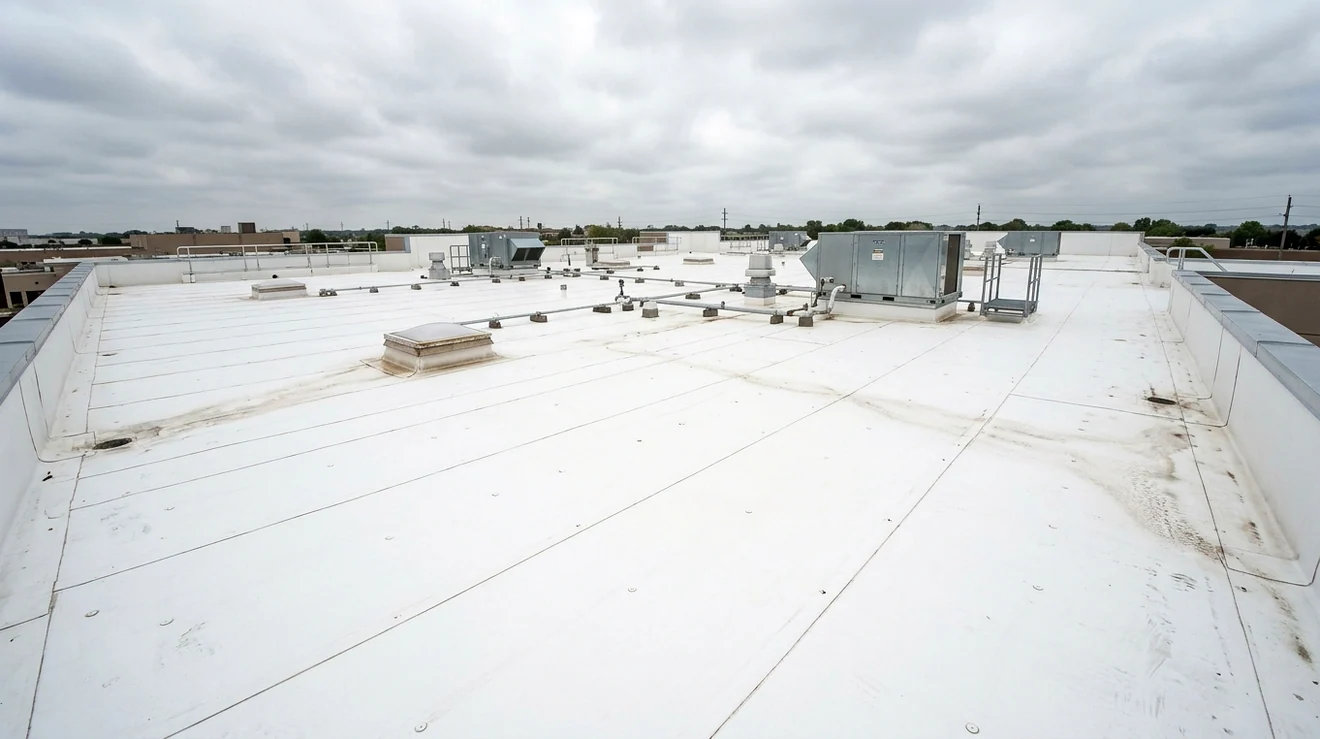
TPO is a white single-ply membrane for flat and low-slope roofs, with seams joined by hot-air welding into one continuous sheet. It reflects sunlight, stands up to UV and suits homes, additions and light commercial buildings. Typical South Florida installs run $9.20 to $15.80 per square foot, including insulation. Call (754) 226-1055 anytime, 24/7, to arrange an on-roof look.
TPO roofing around Pembroke Pines
Flat roofs are common in Pembroke Pines on modern homes, garage additions, Florida rooms, townhome blocks and small commercial buildings. They take the full force of the sun all day, and every low spot holds water after an afternoon storm. TPO handles the heat well: its white surface reflects sunlight, and its heat-welded seams are stronger than the sheet itself when done right.
A good TPO roof starts below the membrane. Polyiso insulation boards add R-value and can be tapered to push water toward drains and scuppers, ending the ponding that ruins most flat roofs. The membrane is then mechanically fastened or fully adhered, depending on the approved assembly. Every seam is probed after welding, and walls, curbs and drains get factory-formed accessories.
When to call
Signs it is time for TPO roofing
Water ponds for days
Standing water still sits in low areas 48 hours after rain, breaking down the old surface and adding stress to the deck.
Blistered or cracked surface
Built-up or rolled roofing shows bubbles, alligator cracking and open laps that let water in every time it rains.
Hot rooms below
Rooms under the flat roof stay hot all afternoon, and a reflective white membrane with new insulation would cut that heat gain.
Repeated leaks at seams
Old torch-applied or cold-applied seams have opened in several spots, and patches no longer keep up with each rainy season.
Adding rooftop equipment
New AC units, solar or vents are going in, and the roof needs new curbs and flashing to handle the extra penetrations.
Light commercial building
A small office, warehouse or retail space needs an economical, reflective flat roof the building can live with for decades.
How the job runs
What happens on your roof
- 01
Core cut and moisture scan
We check the existing layers, take a core sample and look for wet insulation so we know exactly what must be removed and replaced.
- 02
Tear-off and deck repair
Old membrane and wet insulation come off, damaged decking is repaired, and rotted wood nailers along the roof edges are replaced.
- 03
Tapered insulation layout
Polyiso boards, tapered where needed, are installed to create positive slope toward drains, with crickets built behind curbs and along parapet walls.
- 04
Membrane and welded seams
TPO sheets are fastened or adhered per the NOA, every seam is hot-air welded, and each weld is probed with a hand tool to catch voids.
- 05
Flashing, edges and final
Walls, curbs, pipes and drains get welded TPO flashing, edge metal and coping go on, and the final inspection is completed.
Local factors that change this job
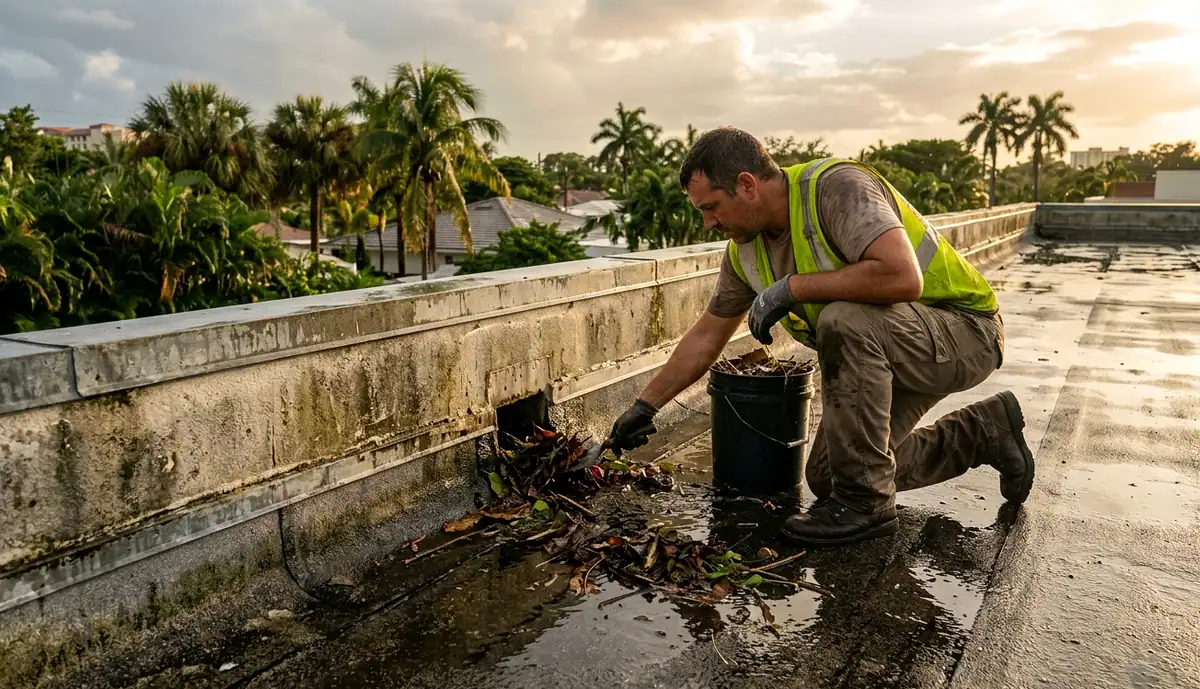
Flat roofs in the HVHZ must use a complete Miami-Dade NOA assembly, so the insulation, fasteners or adhesive and membrane all have to match the tested system. Perimeter and corner zones need extra fasteners because wind uplift is highest there. Broward summer storms can dump several inches of rain in an hour, so tapered insulation and clear drains are essential. Many townhome and villa communities in Pembroke Pines have shared flat roofs, which means association coordination before any work starts.
Your options
Choices worth understanding first
60-mil TPO membrane
The standard thickness for most homes and small buildings. A cost-effective sheet that holds up well when installed over proper insulation with clean welded seams.
80-mil TPO membrane
A thicker sheet with more weathering material above the reinforcing scrim, giving longer service life and better puncture resistance on roofs with foot traffic.
Mechanically fastened system
Plates and screws hold the insulation and membrane down to the deck, with seams welded over the fasteners. Common and economical on wood and metal decks.
Fully adhered system
The membrane is glued to the insulation board with bonding adhesive, giving a smooth, quiet surface that resists flutter in high winds.
Typical cost
What TPO roofing costs in Pembroke Pines
| Tear-off of built-up or rolled roofing | $1.65 to $3.40 per sq ft |
| Tapered polyiso insulation | $2.30 to $4.85 per sq ft |
| 60-mil TPO, installed | $6.40 to $9.70 per sq ft |
| Curb and penetration flashing | $185 to $640 per penetration |
Insulation thickness and taper design are major drivers, along with how many old layers come off and how much wet material turns up. Membrane thickness, the number of penetrations, parapet walls and roof access for materials also matter. Small residential roofs cost more per square foot than large ones. The final price is set after an on-roof look and a core sample. Compare every service on the roofing price guide.
Questions
TPO roofing questions we hear
Each has strengths. TPO is white, reflective and lighter, with welded seams that stay tight under UV. Modified bitumen is thicker, handles foot traffic better and is easier to patch. For a sun-baked roof over living space, TPO often wins on cooling. For a patio or a roof with frequent service traffic, mod bit can be the better fit.
Ponding is fixed below the membrane, not on top of it. We install tapered insulation that slopes water toward drains or scuppers, add crickets behind curbs and walls, and repair any sagging deck. Simply coating over ponding areas does not solve it. The goal is a roof that drains completely within 48 hours after rain.
Sometimes, if there is only one existing layer, it is dry and well attached, and the HVHZ assembly allows a recover. A core cut shows whether the old roof holds moisture. Wet insulation must come out, because trapping it under new TPO causes blisters, rot and fastener corrosion within a few years.
A properly installed 60-mil TPO roof typically lasts 18 to 25 years here, and 80-mil can go longer. Strong UV, ponding water and poor seam welds are what shorten it. Keeping drains clear, checking seams after hurricane season and quickly fixing punctures left by AC service visits all help it reach full life.
Related work
Often booked with this service
Flat Roof Repair
Water sitting on a flat roof for days after a storm finds every weak seam and drain gap, then shows up as a stain over the Florida room.
See this serviceCommercial Roofing
A leaking roof over a retail bay, office or warehouse costs you inventory, tenant goodwill and business days, so repairs need to happen fast and around the people inside.
See this serviceRoof Drain & Scupper Repair
Water backs up on your flat roof after storms, spills over the parapet, or leaks around the drain sitting right above your ceiling.
See this serviceMore flat roofs & coatings services
Where we do this work most
Leak, storm damage or a roof that is simply getting old?
Call the roof line any hour. A real person answers, asks what you are seeing and sets the next step.