What those streaks really are
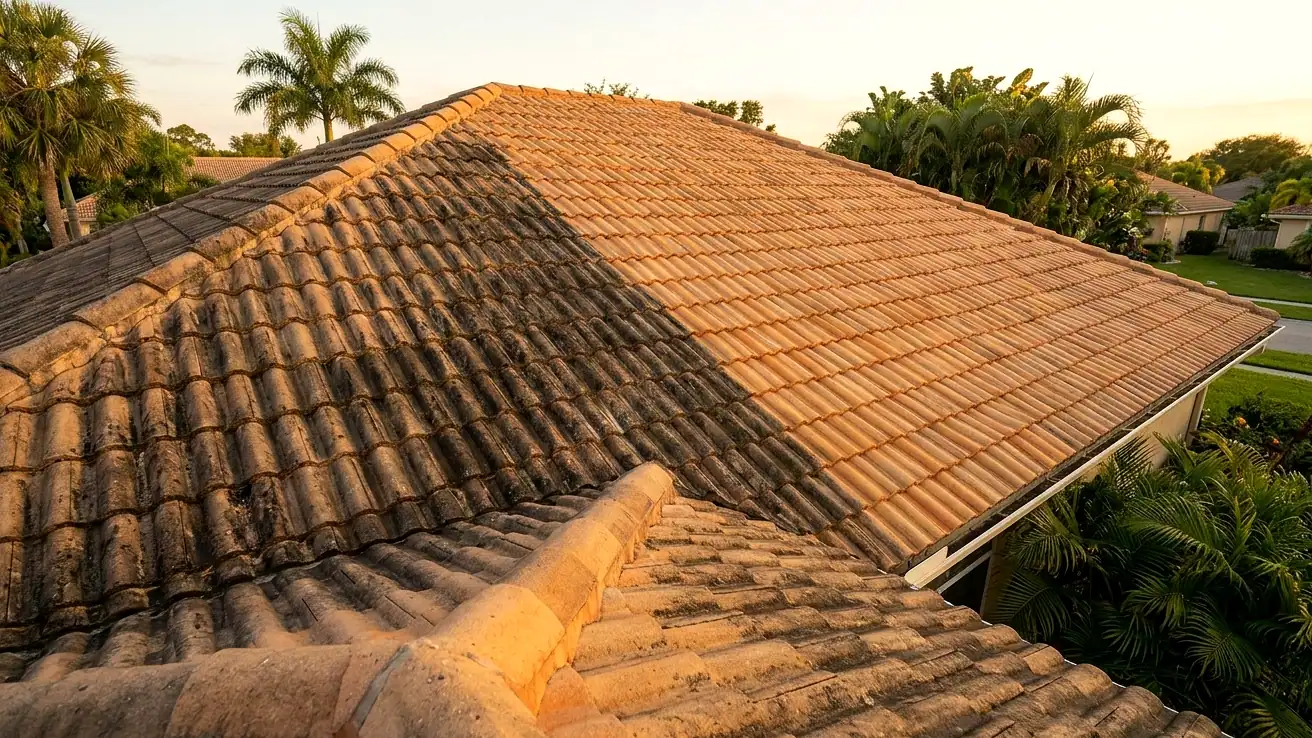
The black or dark green streaks on so many Pembroke Pines roofs are colonies of a hardy airborne algae, often identified as Gloeocapsa magma. Spores travel on wind and settle on roofs, where they grow and darken as they build a protective outer coating against the sun.
Streaks usually start on north and shaded slopes and spread downward with rainwater. They show up on concrete tile, shingles and even some metal roofs. Algae on one house often spreads to neighbors, since spores move freely through a subdivision. That is why treating the whole roof works better than spot cleaning.
Why South Florida roofs get it so badly
Algae needs moisture, warmth and something to feed on, and South Florida supplies all three. High humidity, morning dew and almost daily summer rain keep roof surfaces damp. Shade from trees slows drying, and the limestone filler in many shingles and the surface of concrete tile give algae a good place to grow.
That is why streaks come back even after cleaning. Without some form of prevention, most local roofs show new growth within a few years. Roofs under large shade trees and slopes facing north tend to stay damp longest, so they usually see the heaviest streaks first and the fastest return after a cleaning.
Is algae harmful or just ugly
Algae itself is mostly a cosmetic problem, but it has side effects. Dark roofs absorb more heat, which can warm the attic. Algae holds moisture against the surface, and over time it can be joined by lichen or moss that roots into tile surfaces and shingle granules.
Many HOAs in Pembroke Pines also send violation letters for stained roofs. If you plan to sell, a clean roof looks better in photos and inspection reports, and buyers notice it from the curb. Addressing it before it spreads is usually easier and less costly than waiting several years.
Why pressure washing does more harm than good
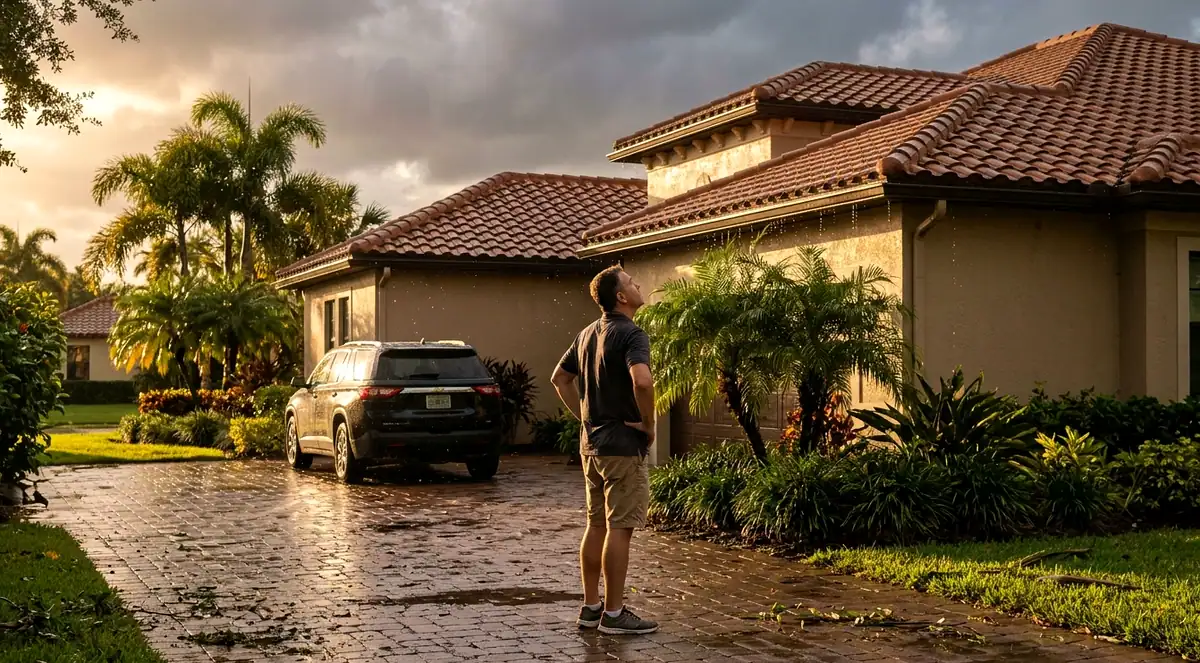
High pressure water strips shingle granules, etches the surface of concrete tile and can crack tiles outright. It also forces water up under tiles and into the underlayment. And it does not kill the algae roots, so growth comes back quickly. Tile edges can chip as well.
Many shingle and tile manufacturers caution against high pressure cleaning in their care guidance, and damage from it can affect manufacturer warranty coverage. Walking on tile to pressure wash it breaks pieces too, which then lets water in. Gentler cleaning protects both the roof and any coverage you have.
How soft washing works
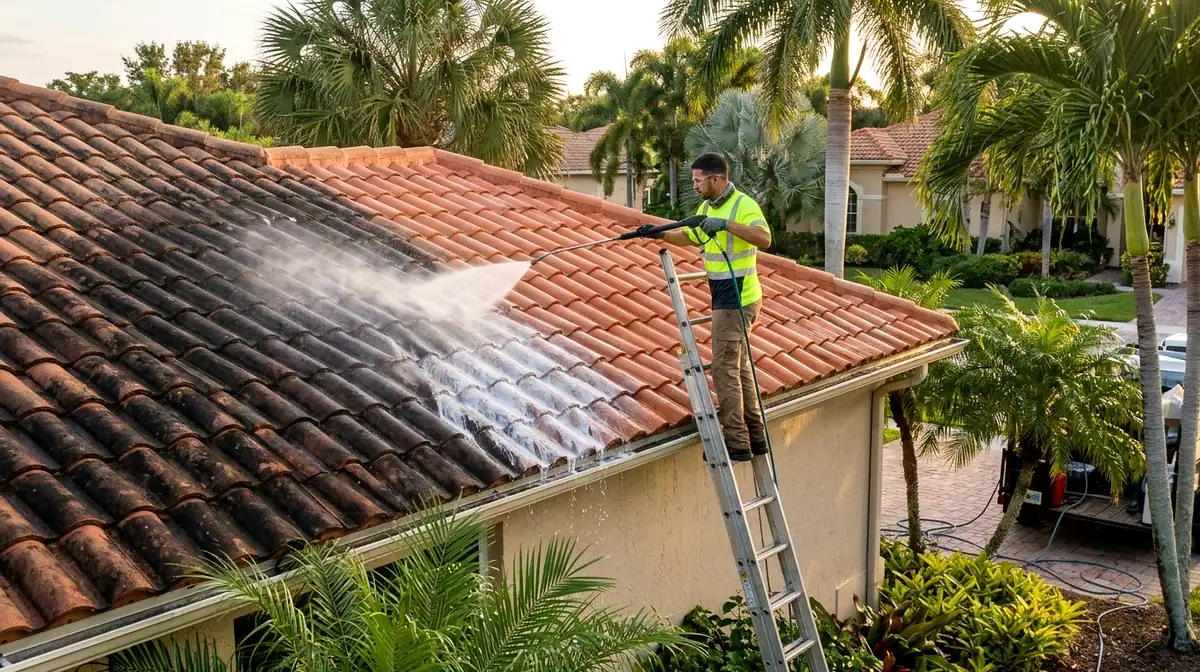
Soft washing uses low pressure, about the force of a garden hose, to apply a diluted cleaning solution that kills algae at the root. After the right dwell time, the roof is rinsed gently. Stains may continue to fade for a few weeks as rain washes away the dead growth.
If you hire it out, ask how the crew protects plants, pools and painted surfaces. Typical soft washing for a single family tile roof in our area runs about $385 to $860, with the final price set after an on-roof look. Ask what solution they use and how they will rinse.
- Pre-wet landscaping and rinse it again after
- Cover or divert runoff from pools and koi ponds
- Keep foot traffic on tile to a minimum
- Never clean from a ladder in wind or rain
Keeping streaks from coming back
Trim branches that shade the roof and drop debris, so surfaces dry faster after rain. Zinc or copper strips near the ridge release small amounts of metal with each rain, which slows regrowth on some roofs. If you are replacing shingles, algae resistant products help too.
Aurora Shield soft washes tile and shingle roofs across Broward, Miami-Dade and southern Palm Beach and checks for broken tiles while on the roof. Call (754) 226-1055 any time, 24/7, to schedule a cleaning. The crew can also point out any slipped or cracked tiles worth fixing before storm season.
Black roof streaks in South Florida are algae fed by humidity, heat and shade. They are mostly cosmetic but hold moisture and attract HOA letters. Skip pressure washing, which damages tile and shingles, and use low pressure soft washing with plant protection, plus trimming and prevention strips.
Questions readers ask
Diluted cleaning solutions can burn plants and upset pool chemistry if runoff is not managed. Good crews soak landscaping with water before and after, direct downspouts away from beds and cover or divert water from pools. Ask how runoff will be handled before any cleaning starts on your home.
Many local roofs need cleaning every two to four years, depending on shade, slope direction and roof material. Roofs under heavy tree cover tend to need it sooner. Trimming branches and adding zinc or copper strips near the ridge can stretch the time between cleanings on some homes.
Storm & Roof Guides Editor at Aurora Shield Roofing Contractors. Writes the storm and roof guides from the questions homeowners ask on the phone line, and has the field crews check each one.