Roof repair
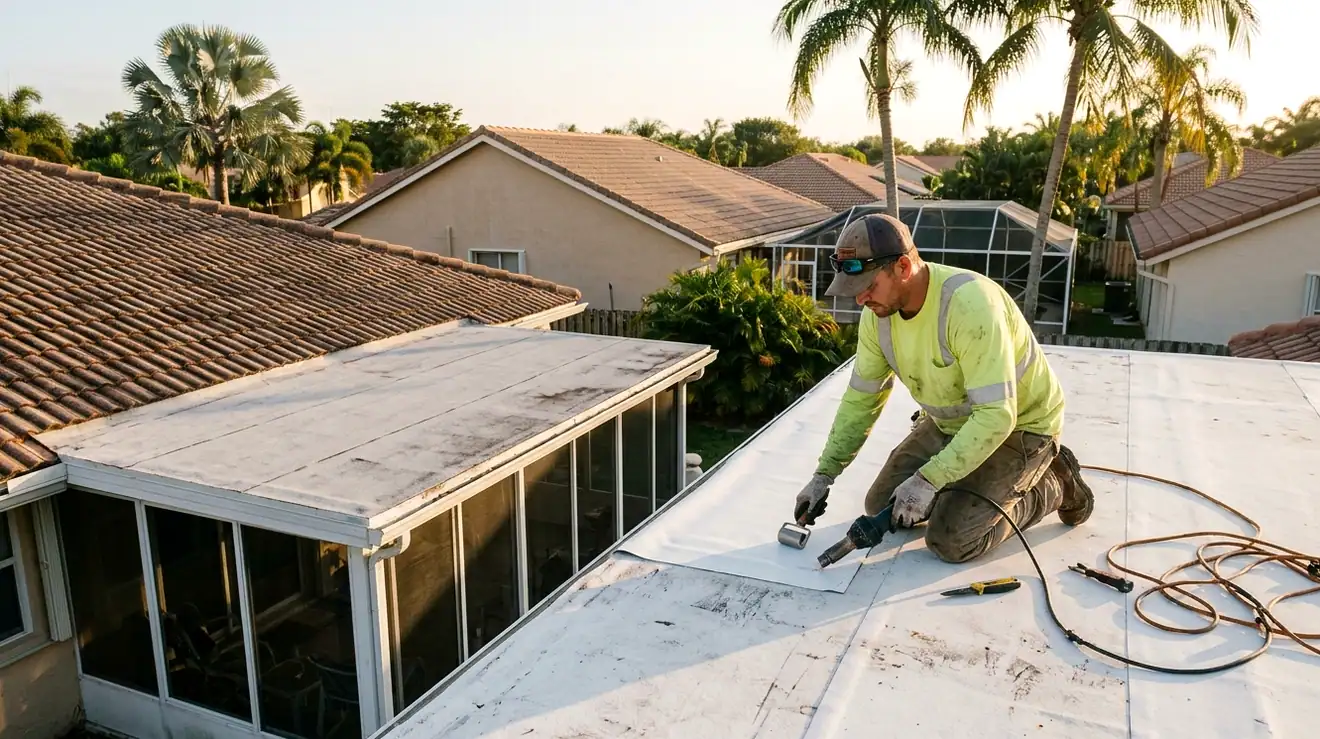
Flat roof repair in Pembroke Pines, FL for porches and additions
Water sitting on a flat roof for days after a storm finds every weak seam and drain gap, then shows up as a stain over the Florida room.
- Open 24/7
- Based on Hiatus Road
- HVHZ-rated materials
- Real person on the line
- Visit booked on the same call
- Photos of what we find
Quick answer
Flat roof repair fixes leaks and wear on low slope roofs: open seams, blisters, cracked membrane, failed flashing at walls, and drains or scuppers that let water pond. Many Pembroke Pines homes have a flat section over a porch, carport or addition. Typical repairs run $520 to $2,640. Call (754) 226-1055, answered 24/7.
Flat roof repair around Pembroke Pines
Flat sections are common on South Florida homes, tucked behind a tile roof over a Florida room, a screened patio or a garage conversion. Because they sit lower, they collect runoff from the main roof as well as direct rain. Most use modified bitumen, older built up roofing with gravel, or a newer single ply membrane like TPO, and each one needs its own repair method.
The most common flat roof problem we see is ponding, meaning water that stays more than 48 hours after a storm. It ages the membrane, grows algae and finds pinholes. We look at slope, drains and scuppers along with the membrane itself, because fixing a leak without fixing the drainage usually means another leak in the same place next summer.
When to call
Signs it is time for flat roof repair
Water ponding for days
Standing water two days after rain means the slope or drainage has failed and the membrane is aging under constant moisture.
Blisters and bubbles
Raised bubbles in modified bitumen or built up roofs show trapped moisture or air between layers that can split open in heat.
Open or lifting seams
Seams that peel back at the laps let water run under the membrane, often traveling far before it shows up inside.
Cracks at the wall line
Splits where the flat roof meets the house wall or tile roof show failed base flashing, a very common leak source.
Clogged scuppers
Scuppers or drains blocked with leaves and dirt back water up over the flashings and into the wall or ceiling below.
Alligator cracking
A cracked, scaly surface pattern means the top layer has dried out under UV and no longer sheds water well.
How the job runs
What happens on your roof
- 01
Survey surface and drainage
We check membrane condition, seams, flashings, and how water moves to drains and scuppers, marking ponding areas and suspect spots.
- 02
Probe and core if needed
Seams are probed for adhesion, and a small core sample may be cut to check for wet insulation or hidden layers under the surface.
- 03
Cut out and dry damage
Blisters and damaged membrane are cut out, wet material is removed, and the area is dried before any new layers go down.
- 04
Patch or rebuild the section
We install new membrane matched to your system, using heat welded TPO seams or torch or self-adhered modified bitumen lapped well past the damage.
- 05
Correct drainage and flashing
Base flashings are resealed, scuppers cleared or enlarged, and tapered fill or a cricket is added where water ponds, then everything is photographed.
Local factors that change this job
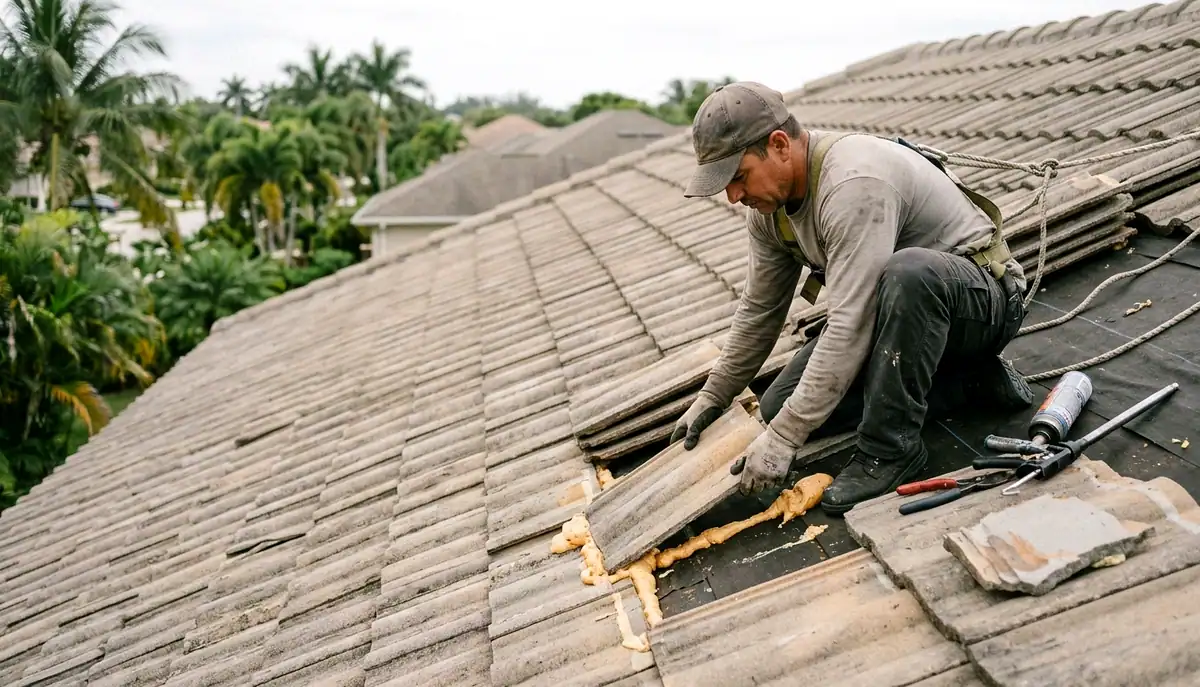
Flat roofs in Pembroke Pines carry runoff from surrounding tile roofs during summer storms, so drainage matters more here than almost anywhere. In the HVHZ, membranes, adhesives and insulation must carry Miami-Dade NOA or equivalent approval, and edge metal needs approved fastening to resist wind uplift at the perimeter. High UV breaks down the top surface of modified bitumen quickly, which is why reflective coatings and granulated cap sheets are common. Larger repairs require a permit from the building department.
Your options
Choices worth understanding first
Modified bitumen patch
A torch applied or self-adhered patch with a granulated cap sheet repairs most modified bitumen roofs. Self-adhered sheets are often used near walls and wood trim where open flame is a concern.
TPO heat welded repair
TPO patches are heat welded to clean, prepared membrane, creating a fused seam. The existing TPO must still be weldable, which we test before quoting.
Tapered insulation or cricket
Where water ponds, tapered insulation or a small cricket adds slope toward the drain. It fixes the cause of repeated leaks rather than only the symptom.
Reflective coating
A reflective coating over sound membrane reduces heat and UV wear. It is not a fix for wet insulation or open seams, which must be repaired first.
Typical cost
What flat roof repair costs in Pembroke Pines
| Seam or blister repair | $520 to $1,090 |
| Base flashing reseal at wall, per 10 feet | $340 to $760 |
| Section rebuild with new insulation, per 100 sq ft | $1,180 to $2,640 |
| Scupper clearing and resealing | $210 to $485 |
Cost depends on membrane type, the size of the damaged area, whether the insulation underneath is wet, how much flashing must be rebuilt at walls, and whether slope needs correcting. A single seam repair costs much less than a section with soaked insulation. The final price is set after an on-roof look and given to you in writing first. Compare every service on the roofing price guide.
Questions
Flat roof repair questions we hear
A little water that dries within 48 hours after rain is generally acceptable on low slope roofs. Water that stays longer, leaves dirt rings, or grows algae means slope or drainage needs work. Over time those ponding areas wear out first, so we often add tapered fill or improve the scupper when we repair them.
Usually, but the joint between them often matters most. Where tile runs down onto a flat section, the transition flashing is a weak point. We may need to lift a row of tile to tie new membrane and flashing in correctly, then reset that tile. That small step prevents repeat leaks at the joint.
When done by trained crews with a fire watch and the right setup, torch applied modified bitumen is common and safe. Near wood fascia, walls or vents, we often switch to self-adhered sheets instead, which need no flame at all. We choose the method based on your roof edges and what sits nearby.
Repair first. A coating sits on top of the membrane and cannot fix open seams, blisters or wet insulation underneath. Coating over those problems traps moisture and hides damage. Once the repairs are done and the surface is clean and dry, a reflective coating can help the membrane last longer in the sun.
Related work
Often booked with this service
TPO Roofing
Your flat roof bakes in the sun, ponds water for days after storms, and the old gravel or rolled roofing is cracking at every seam.
See this serviceSilicone Roof Coating
Your flat or metal roof is worn but still dry underneath, and you want to add years of life without paying for a full tear-off.
See this serviceRoof Leak Repair
Water dripping into a bedroom during an afternoon downpour usually enters several feet from the stain, so patching the obvious spot rarely stops the leak for good.
See this serviceMore roof repair services
- Roof Repair
- Leak Repair
- Tile Repair
- Shingle Repair
- Metal Roof Repair
- Flashing Repair
- Fascia & Soffit
- Skylights
- Mansard Repair
- Truss & Rafter Repair
Where we do this work most
Leak, storm damage or a roof that is simply getting old?
Call the roof line any hour. A real person answers, asks what you are seeing and sets the next step.