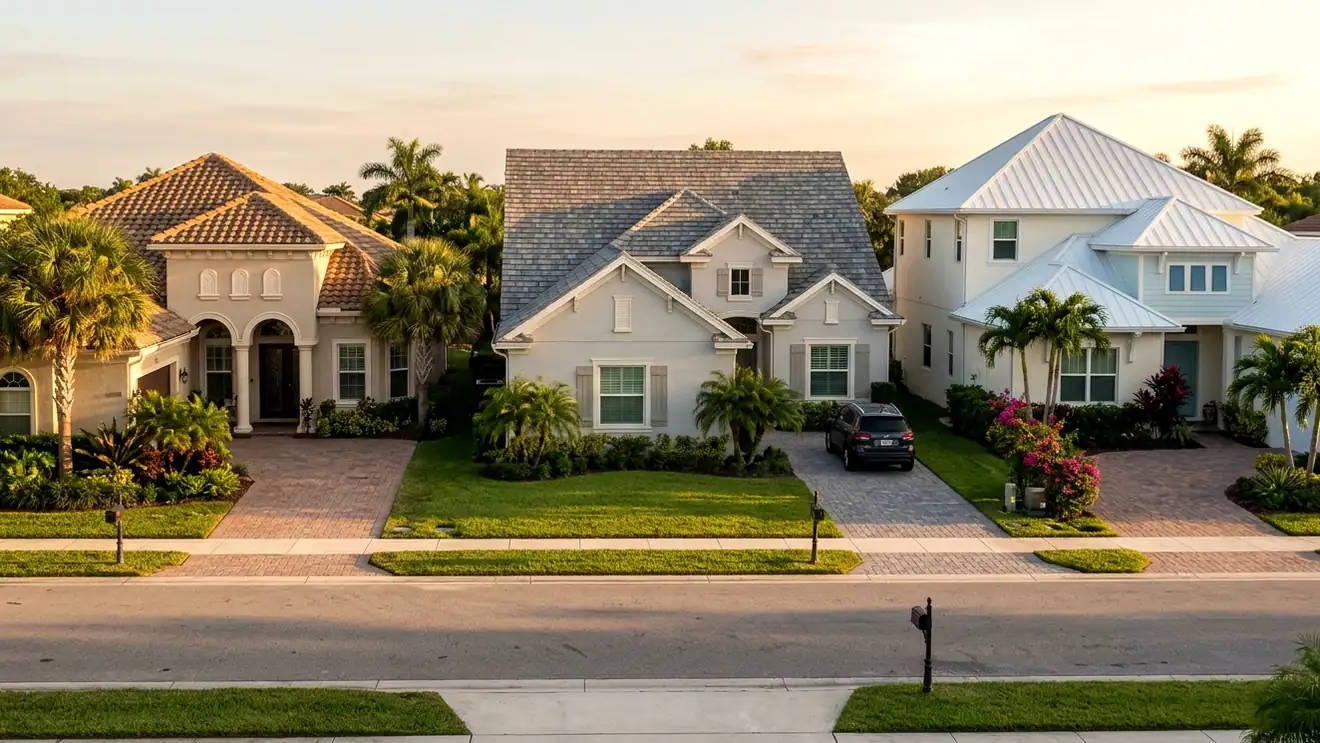
What a Broward County roof has to handle
Broward sits in the High Velocity Hurricane Zone, so every roofing product used here needs Miami-Dade NOA or equivalent HVHZ approval, and every reroof needs a permit with inspections. That rule levels the field a little: any approved tile, shingle or metal system has passed demanding wind and water tests before it reaches your house.
Beyond hurricanes, your roof deals with near daily summer downpours, intense UV, humidity that feeds algae and, closer to the coast, salt air. The right material is the one that handles those conditions on your specific house, within your budget and your HOA's rules. Coastal homes east of I-95 also face more corrosion on metal parts and fasteners.
Concrete tile: the neighborhood standard
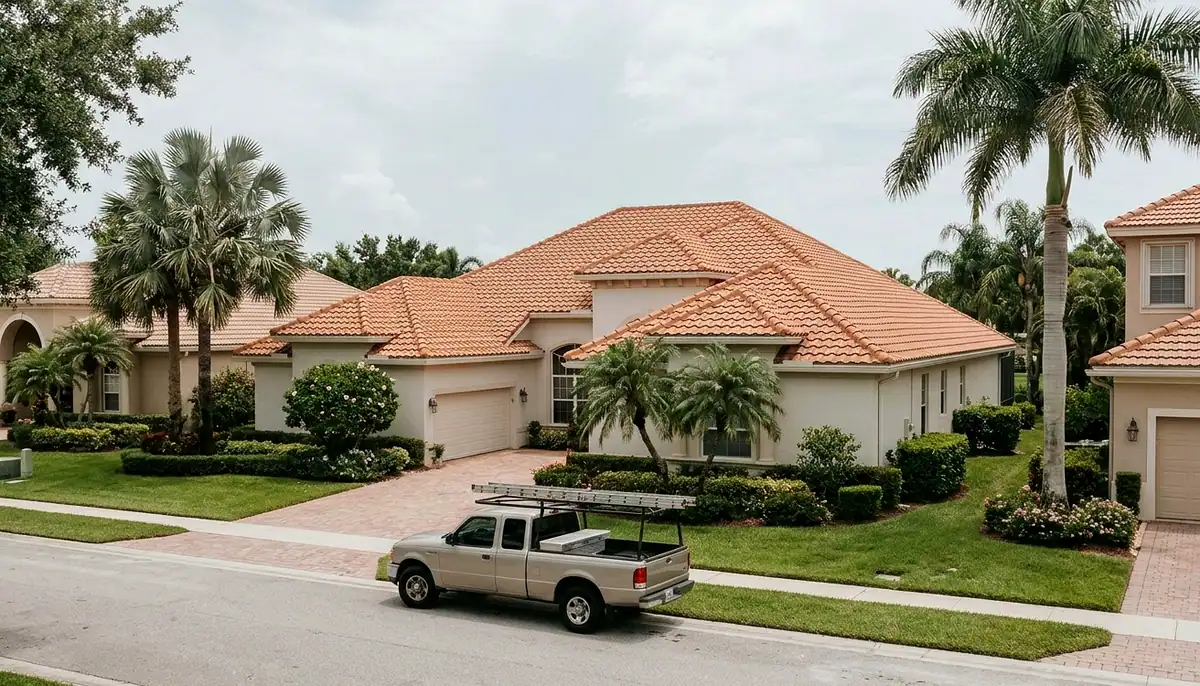
Concrete tile is the most common roof in Pembroke Pines subdivisions built from the 1980s through the 2000s. The tile itself can last for decades, it stands up well to heat and it fits the look most HOAs expect. It is also heavy, so it needs a framing system designed to carry it.
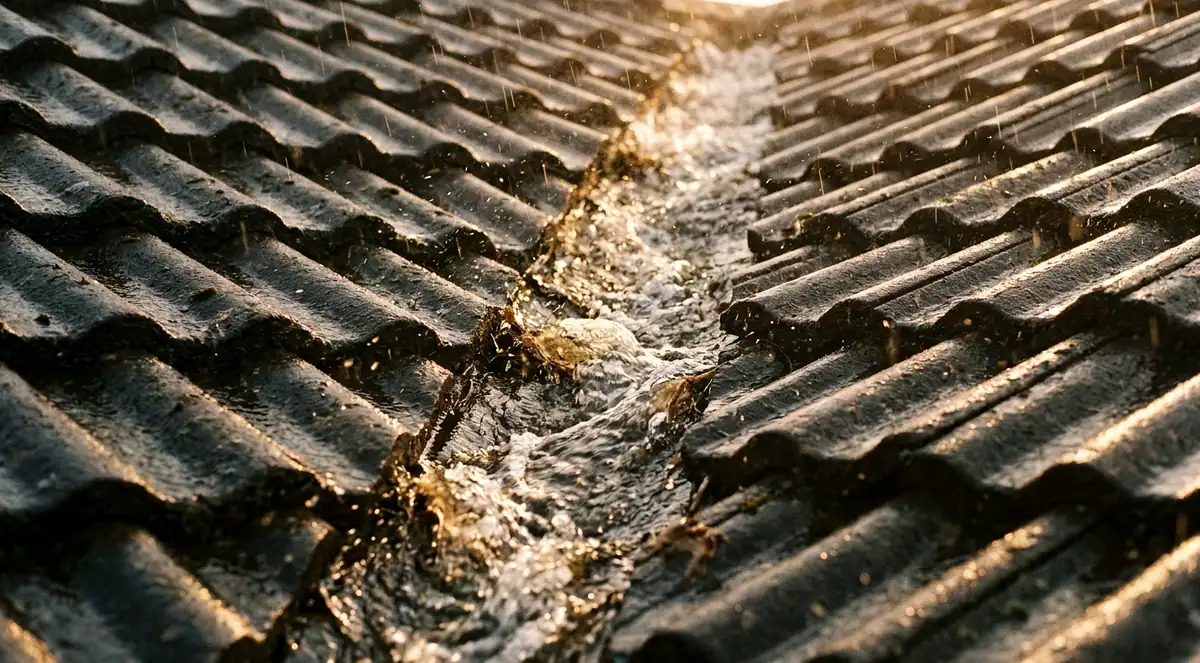
The weak point is not the tile but the underlayment beneath it, which wears out far sooner. Many local tile roofs are reaching that age now. Tile also cracks when walked on carelessly, so repairs take a crew that knows how to move across it. Typical tile reroofs here run about $28,400 to $56,700 for a single family home.
Architectural shingles: lower cost, shorter life
Architectural shingles cost the least up front and install quickly, often in a few working days. HVHZ approved shingles use specific nailing patterns and adhesive strips rated for high winds. They are lighter than tile, which makes them an option on homes not framed for tile weight.
The tradeoff is lifespan. South Florida heat and UV age asphalt faster than the national averages printed on the bundle, and an older shingle roof can draw more insurer questions as it nears 15 years. Typical shingle replacements in Broward land around $14,600 to $27,900, depending on size, pitch and deck condition.
Standing seam metal: built for wind and heat
Standing seam metal uses long panels with raised, interlocking seams and hidden fasteners, so there are few exposed points for wind or water to attack. Light colored finishes reflect a good share of the sun's heat, which can help attic temperatures. A well installed system can outlast tile underlayment and shingles by many years.
Near the coast, ask about aluminum panels or coatings rated for salt exposure, since bare steel edges can corrode. Rain noise is rarely an issue over a solid deck and underlayment. Metal costs the most up front, typically $34,800 to $68,300 for a home in our area.
HOA rules, structure and resale
Many Pembroke Pines communities restrict roof material and color, so get written HOA approval before you sign anything. Switching from tile to metal or shingle reduces weight and is usually simple structurally. Going from shingle to tile adds a lot of weight and may need an engineering review of the framing.
Think about how long you plan to stay. A buyer in a tile neighborhood may expect tile, while a long term owner may value metal's lifespan more than its price. Resale value matters too, but your own comfort and the roof's total cost over the years you live there usually matter more.
- Tile: long tile life, underlayment is the clock to watch
- Shingle: lowest cost, shortest lifespan in our climate
- Metal: highest cost, strong wind performance, long life
- All three: HVHZ approved product and permit required
Comparing proposals the right way
When you compare bids, line up the same things: the exact product and its NOA, the underlayment type, whether deck re-nailing and a secondary water barrier are included, and how flashings and vents are handled. A low number that skips these items is not really cheaper. Every price is set after an on-roof look at your deck and framing.
Aurora Shield installs all three systems and can walk your roof, explain which ones suit the house and price them side by side. Call (754) 226-1055 any time, day or night, to set that up. Ask for each option in writing with the same scope items so the comparison is fair.
Concrete tile fits most Pembroke Pines neighborhoods but needs underlayment replacement on a schedule. Shingles cost least and age fastest here. Standing seam metal costs most and lasts longest. Check HOA rules, framing and the full scope of each bid, including deck nailing and secondary water barrier.
Questions readers ask
Often yes, but it depends on your HOA's architectural rules, which may limit materials, profiles and colors. Ask for the guidelines in writing and get approval before you sign a contract. Some communities allow metal panels that mimic a tile profile, while others only accept standing seam in approved colors.
Over a solid wood deck with underlayment, which is how residential standing seam is installed here, rain noise inside the house is usually similar to other roofs. The loud metal roofs people remember are typically panels screwed over open framing on barns or sheds, which is a very different assembly.
Storm & Roof Guides Editor at Aurora Shield Roofing Contractors. Writes the storm and roof guides from the questions homeowners ask on the phone line, and has the field crews check each one.