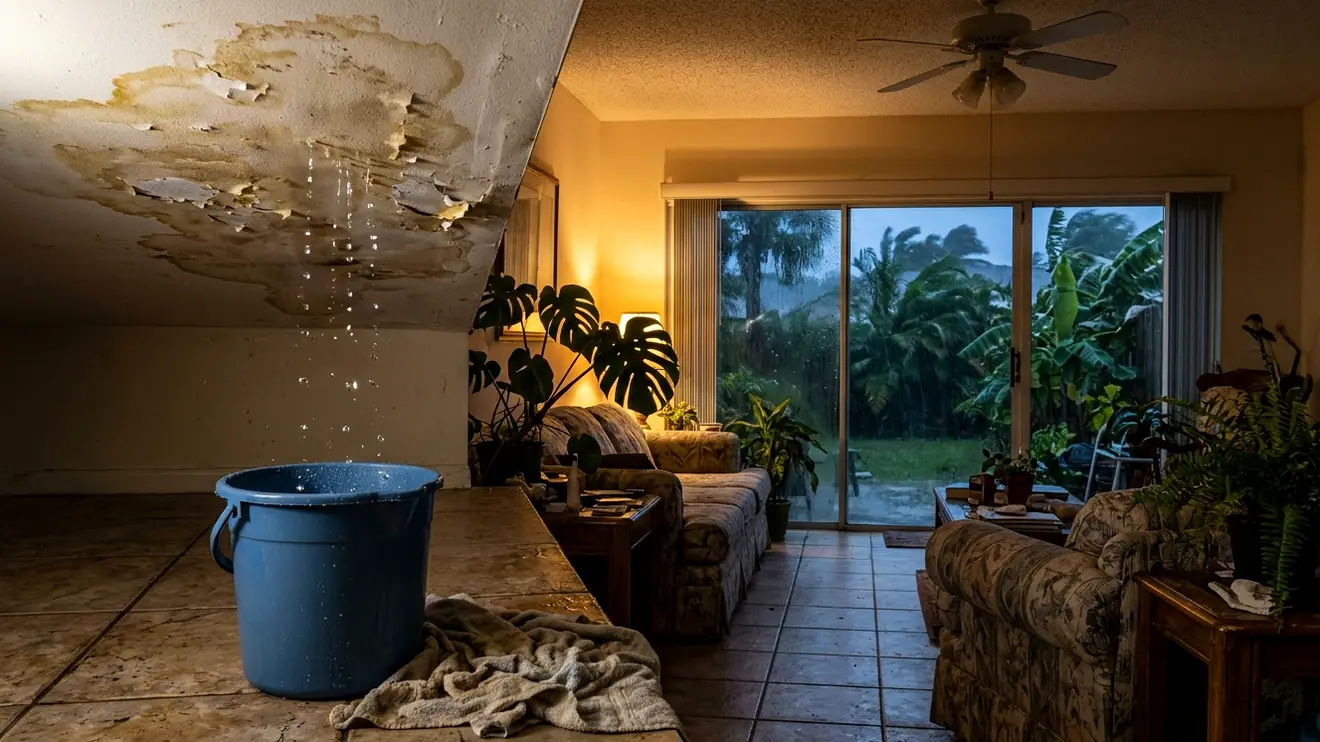
Safety first: water and electricity
Before you grab a bucket, look at where the water is going. If it is dripping from or near a light fixture, ceiling fan, outlet or the electrical panel, stay out of that area. Water and electricity together can cause shocks and fires, and a wet ceiling around a fixture can carry current you cannot see.
If you can reach your breaker panel while standing on a dry floor with dry hands, switch off the circuits for the affected rooms. If the panel is wet, or you have to stand in water to reach it, do not touch it. Leave the area and call your power company or 911.
Stay off the roof
Never go on a roof during a storm or while it is still wet, even if the leak looks easy to reach. Wet tile and shingles are slick, wind gusts can knock you off a ladder and lightning is a real danger in South Florida thunderstorms. Every year, people are hurt far worse than their roofs.
The roof can wait until conditions are safe and a crew with the right equipment arrives. Your job in the first hour is inside the house. Lightning, flying debris and slippery surfaces make even a short climb dangerous, and a fall from a single story roof can be life changing.
Contain the water inside
Once the area is safe, catch the water and protect what you can. Move furniture, electronics and rugs away from the drip. Lay towels around buckets to catch splashes. If water is spreading quickly across a floor, focus on keeping it away from cords, power strips and floor outlets first.
Keep checking upstairs rooms, closets and the attic hatch area, since water travels along framing and can show up far from the opening on the roof. A small stain on the ceiling can mean much more water above it, so check those spots every few minutes.
- Place buckets or bins under each drip
- Lay towels or plastic on floors around them
- Move valuables and electronics to a dry room
- Wipe up water quickly to avoid slips
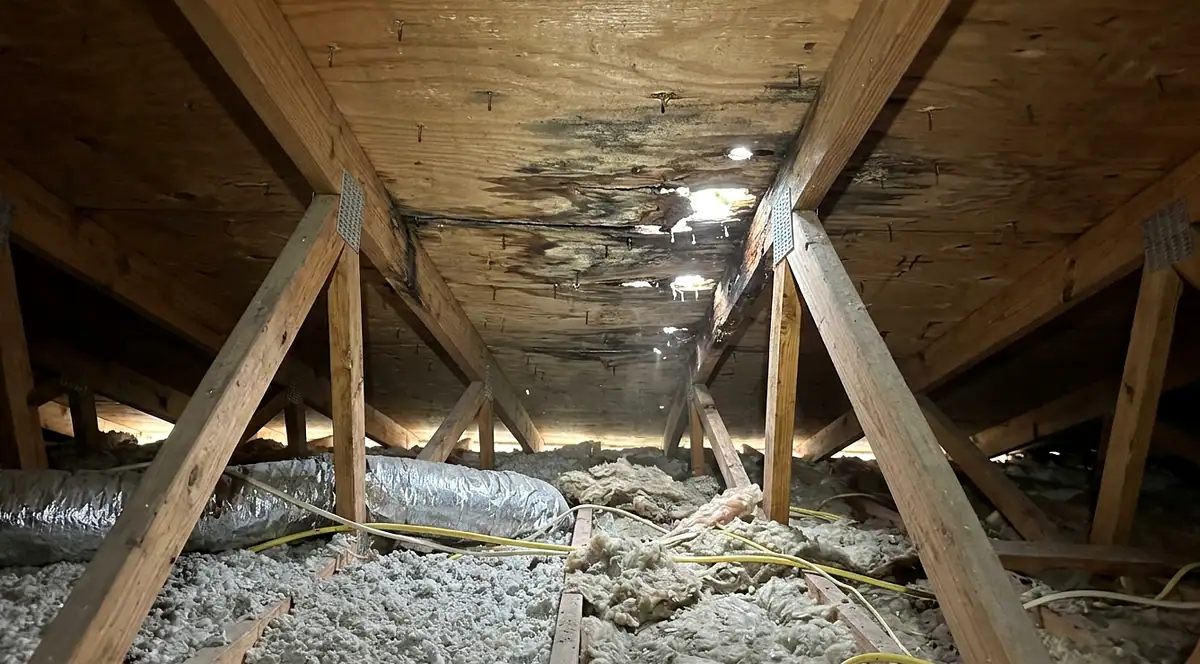
What to do about a bulging ceiling
A ceiling that sags or bulges is holding water, and it can come down suddenly. Keep people and pets out from under it. If there is no light fixture or wiring nearby and the power to the room is off, some homeowners relieve the pressure by poking a small hole at the lowest point with a screwdriver while standing to the side, with a bucket below.
If you are unsure, do not attempt it. Close off the room and wait for help. A collapsed ceiling is far more dangerous than a wet floor. Take a photo so the roofer and your insurer can see where the bulge formed and how large it became.
Document as you go
Take photos and short videos of the stain, dripping water, wet floors and damaged belongings, with time stamps. Note when the leak started and how it changed during the storm. This record helps the roofer trace the source and gives you something clear to share with your insurer.
Keep damaged items rather than throwing them away right away, unless they create a health hazard. Contact your insurer about the leak, since only they can explain your coverage and what they need from you. Ask them what documents and photos they need from you and how to send them.
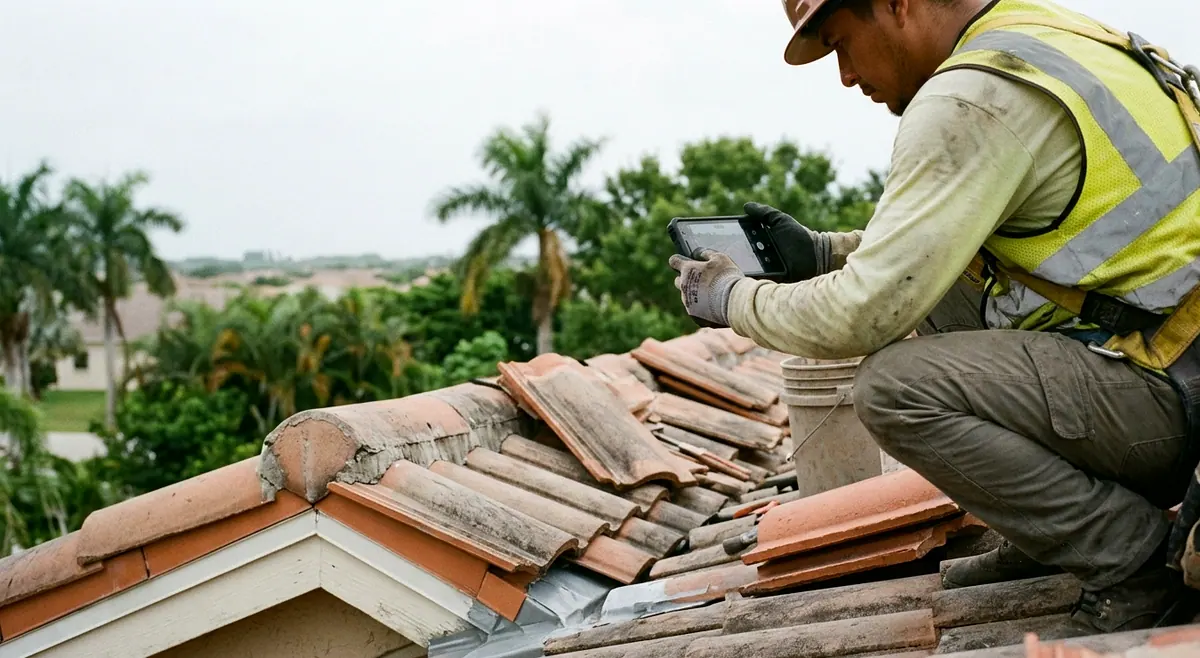
Call for emergency tarping
Call for emergency tarping as soon as you know the roof is leaking, even while the storm is still passing, so a crew is lined up. They will come out once winds drop to safe working levels, secure a tarp over the damaged area and take photos for your records. Typical emergency tarping in our area runs about $385 to $1,270, with the final price set after an on-roof look.
Aurora Shield answers (754) 226-1055 24/7 for leaks across Pembroke Pines, Broward, Miami-Dade and southern Palm Beach. We document the damage with photos and a written scope, and you handle coverage questions with your insurer. Keep your phone charged so the crew can reach you when they are on the way.
Put safety first: stay away from water near fixtures, outlets and the panel, and never go on a wet roof. Catch the water, protect belongings, keep clear of sagging ceilings and photograph everything. Call for emergency tarping right away so a crew can secure the roof once conditions are safe.
Questions readers ask
Only in rooms where the power is safe to use and no water is near outlets or cords. Start with fans in dry areas next to the wet room, and plug them into outlets well away from the leak. Once the roof is tarped and the leak stops, thorough drying helps prevent mold.
It is better to wait. Attics during storms are dark, hot and full of wiring, and stepping off a joist can put a foot through the ceiling. Wet insulation also hides hazards. Once the storm passes and power to the area is safe, a roofer can trace the source from both the attic and the roof.
Storm & Roof Guides Editor at Aurora Shield Roofing Contractors. Writes the storm and roof guides from the questions homeowners ask on the phone line, and has the field crews check each one.